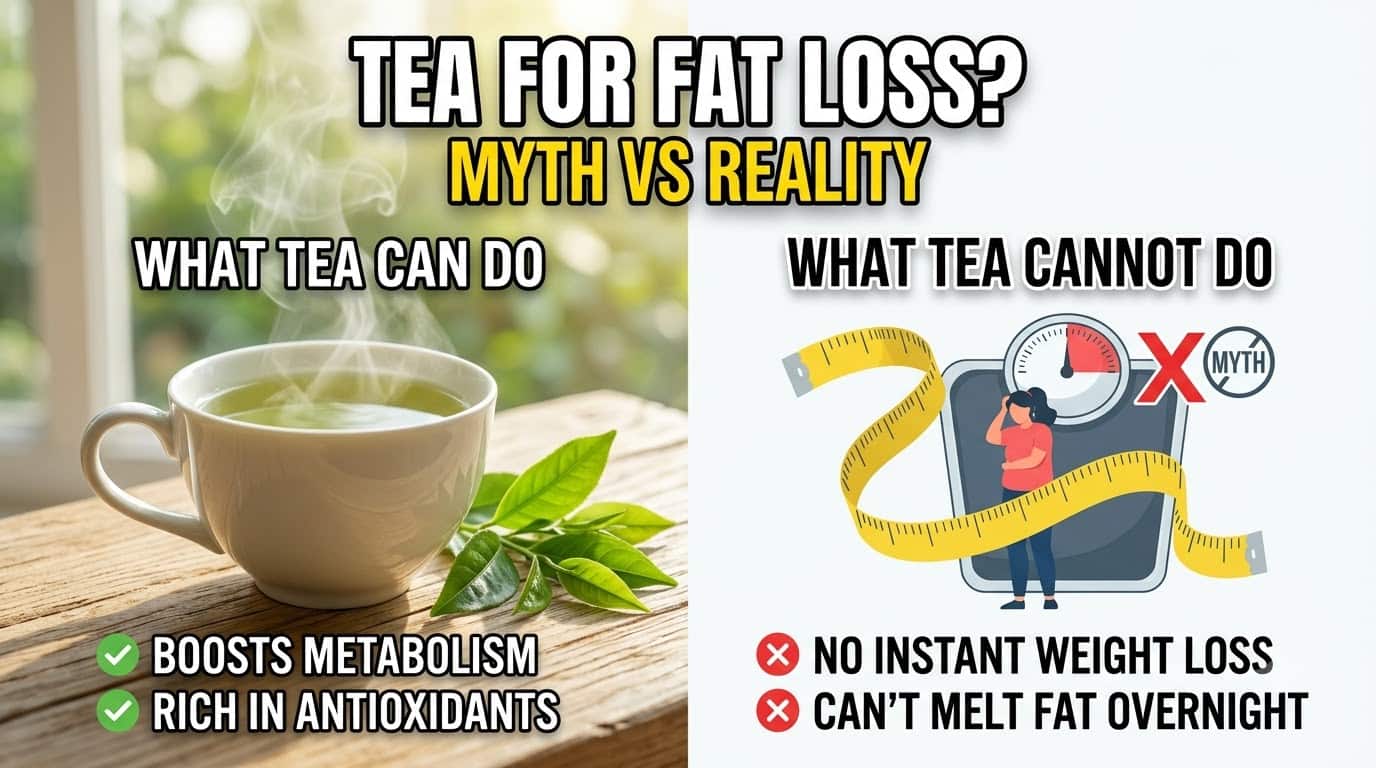
Many people enjoy tea every day, and it is often promoted as a natural drink for weight loss. Green tea, black tea, oolong tea, herbal tea, ginger tea, and many other varieties are commonly advertised as drinks that can help people lose fat.
But what is the truth about tea for fat loss?
Tea can be part of a healthy eating pattern, especially when it replaces high-calorie sugary drinks. Some types of tea contain caffeine and plant compounds that may have small effects on energy use or metabolism. However, tea is not a magic fat-burning solution.
Drinking several cups of tea will not automatically remove body fat if your overall lifestyle does not support weight management.
Long-term fat loss usually depends on a combination of factors, including food intake, physical activity, sleep, stress management, and overall health. Tea may support healthy habits, but it should not replace balanced meals or regular exercise.
This article explains different types of tea, how tea may fit into a weight-loss plan, common myths about tea and fat burning, possible side effects, and practical ways to enjoy tea responsibly.
Best Organic Baby Food: What Parents Should Know
Can Tea Really Help With Fat Loss?
Tea alone does not cause dramatic fat loss.
However, tea may support a healthy weight-management routine in several practical ways.
For example, replacing a sugary soft drink with unsweetened tea may reduce the amount of added sugar and calories you consume.
A warm cup of tea may also become part of a regular routine that helps some people avoid unnecessary snacking.
Some teas contain caffeine. Caffeine can temporarily affect alertness and energy expenditure, but this does not mean that drinking tea will cause significant weight loss.
The most important factor is your overall lifestyle.
If someone drinks green tea but regularly consumes more calories than their body needs, tea alone is unlikely to create meaningful fat loss.
It is more accurate to think of tea as a possible part of a healthy lifestyle rather than a treatment for excess body fat.
Why Do People Connect Tea With Weight Loss?
Tea has been associated with health and wellness for a long time.
Today, social media and product advertisements often make stronger claims, such as:
- “Melt belly fat.”
- “Detox your body.”
- “Burn fat while sleeping.”
- “Lose weight without exercise.”
- “Flush fat from your body.”
These claims are usually oversimplified or misleading.
Body fat is not something that can simply be flushed out with a drink.
Fat loss involves complex processes related to energy balance and the body’s metabolism.
A healthy lifestyle can support gradual changes in body weight and body composition, but there is no ordinary tea that specifically melts fat from one part of the body.
Green Tea for Fat Loss
Green tea is one of the most commonly discussed teas for weight management.
It contains caffeine and naturally occurring plant compounds called catechins.
Research has explored green tea and its possible relationship with body weight and metabolism. However, results do not support the idea that green tea is a powerful or guaranteed weight-loss solution.
If green tea is part of your normal routine and you enjoy it, it can be a reasonable beverage choice.
The greatest practical benefit may be that plain green tea can replace a sweetened drink.
A Simple Example
Imagine that someone usually drinks a large sugary beverage every afternoon.
Replacing that drink with unsweetened green tea may reduce daily calorie intake.
In this situation, the benefit is not because green tea magically destroys body fat. The benefit comes mainly from choosing a lower-calorie beverage.
How to Drink Green Tea
If you enjoy green tea:
- Drink it without large amounts of added sugar.
- Avoid treating it as a replacement for meals.
- Be aware of its caffeine content.
- Avoid drinking excessive amounts just to lose weight.
You do not need to force yourself to drink green tea if you dislike it.
Ikaria Lean Belly Juice for Weight Loss – What to Know
Black Tea and Weight Management
Black tea is another popular beverage.
It also contains caffeine and various plant compounds.
Plain black tea can be a low-calorie drink.
However, what you add to it can change its nutritional value.
For example:
- Plain black tea may contain very few calories.
- Tea with several spoons of sugar adds more calories.
- Sweetened bottled tea may contain significant amounts of added sugar.
If your goal is weight management, pay attention to the entire drink rather than only the word “tea.”
Oolong Tea for Fat Loss
Oolong tea is sometimes promoted as a special fat-burning tea.
Like other teas, it may contain caffeine and plant compounds.
However, it should not be marketed as a guaranteed method for losing body fat.
If you enjoy the taste of oolong tea, it can be included as part of your normal beverage routine.
The same principle applies: choosing unsweetened tea instead of high-calorie drinks may be more useful for weight management than expecting the tea itself to produce major fat loss.
Herbal Tea for Weight Loss
Herbal teas are different from traditional teas made from the Camellia sinensis plant.
Common herbal teas include:
- Ginger tea
- Peppermint tea
- Chamomile tea
- Hibiscus tea
- Cinnamon-based herbal drinks
Many herbal teas are naturally caffeine-free, although this depends on the ingredients.
Herbal tea can be enjoyable and may be a good alternative to sugary beverages.
However, be careful with products marketed as detox tea, slimming tea, or weight-loss tea.
Some products may contain ingredients with laxative effects.
A laxative can cause bowel movements or temporary water loss, but this is not the same as losing body fat.
Frequent use of laxatives for weight loss can be harmful.
Best Shakeology Shakes Complete Nutrition Guide
Ginger Tea for Fat Loss
Ginger tea is popular because ginger has a strong flavor and is commonly used in food and traditional drinks.
A cup of unsweetened ginger tea can be a pleasant beverage.
However, drinking ginger tea does not specifically burn body fat.
If you enjoy ginger tea, drink it because you like the taste and it fits your overall eating pattern.
Avoid exaggerated claims such as:
“Ginger tea melts belly fat overnight.”
There is no reliable basis for treating an ordinary cup of ginger tea as a targeted fat-burning treatment.
Lemon Tea and Weight Loss
Lemon tea is another popular drink.
Adding lemon to tea can add flavor without adding much energy.
This can be useful if it helps you drink plain, unsweetened beverages.
However, lemon does not dissolve body fat.
Drinking lemon tea in the morning does not create a special fat-burning effect simply because it is consumed on an empty stomach.
You can enjoy lemon tea at a time that suits you.
Does Tea Increase Metabolism?
Some components of tea, particularly caffeine, can temporarily influence energy expenditure.
However, this should not be misunderstood.
A temporary change in metabolism does not mean that someone will automatically experience significant or permanent fat loss.
The human body also adapts to many changes over time.
If your main goal is to improve weight management, focus on habits with a larger overall effect, such as:
- Eating balanced meals.
- Managing portion sizes.
- Limiting sugary drinks.
- Being physically active.
- Getting adequate sleep.
- Maintaining healthy habits consistently.
Tea can fit into this lifestyle, but it is not the foundation of successful fat loss.
Can Tea Reduce Belly Fat?
No tea can specifically target fat from only the stomach area.
This idea is known as spot reduction, and it is a common misconception.
The body does not allow you to choose exactly where fat will disappear first.
When body fat decreases, changes occur according to many factors, including genetics and individual body characteristics.
Doing abdominal exercises can strengthen abdominal muscles, but drinking tea or doing one specific exercise does not guarantee that fat will disappear only from the stomach.
A better goal is improving overall health and body composition rather than searching for one drink to target belly fat.
The Biggest Benefit of Tea: Replacing Sugary Drinks
For many people, this is where tea can be genuinely useful.
Sugary drinks can add calories to the diet without providing the same feeling of fullness as solid food.
If you regularly drink:
- Soft drinks
- Sweetened tea
- Sweet coffee
- Energy drinks
- Sugary beverages
Replacing some of these with unsweetened tea or water may support your weight-management goals.
Example
Instead of:
Sugary drink → every afternoon
You might choose:
Unsweetened tea → most days
This is a practical lifestyle change.
However, do not assume that you need to drink tea if water is your preferred beverage.
Water is also an excellent choice.
How to Include Tea in a Healthy Weight-Loss Plan
The simplest approach is to treat tea as a beverage, not as a weight-loss medicine.
Choose Unsweetened Tea More Often
Added sugar can turn a low-calorie drink into a higher-calorie one.
Try drinking tea plain or gradually reducing the amount of sugar you add.
Do Not Use Tea to Skip Meals
Some people use large amounts of tea to suppress appetite and avoid eating.
This is not a healthy long-term strategy.
Your body needs adequate nutrition.
Instead, build balanced meals that include vegetables, fruits, suitable protein sources, and other nutritious foods.
Watch Your Caffeine Intake
Green tea and black tea contain caffeine.
Too much caffeine may cause:
- Difficulty sleeping
- Nervousness
- Shakiness
- Headaches
- A fast heartbeat in some people
- Digestive discomfort
People react differently to caffeine.
If caffeine affects your sleep, consider avoiding caffeinated tea later in the day.
Make Tea Part of a Routine
A simple routine might look like this:
- Morning: Tea if you enjoy it.
- During the day: Water as your main beverage.
- Afternoon: Unsweetened tea instead of a sugary drink.
- Evening: A caffeine-free herbal tea if desired.
There is no requirement to follow this exact schedule.
Choose a routine that works for you.
Tea and Exercise
Tea should not replace physical activity.
Regular movement is an important part of a healthy lifestyle and can support weight management.
If you are currently inactive, you can begin with simple activities such as walking.
Other options include:
- Cycling
- Swimming
- Dancing
- Strength training
- Yoga
- Gardening
The best activity is usually one you can continue consistently.
You do not need an extreme exercise routine to start becoming more active.
A realistic approach is better than starting too hard and quitting after a few days.
Tea and a Healthy Diet
A cup of tea cannot balance out an unhealthy diet.
For example, drinking green tea while regularly consuming large amounts of sugary drinks, fried foods, and highly processed snacks will not automatically lead to fat loss.
Focus on your overall eating pattern.
Try to include:
- Vegetables
- Fruits
- Beans and lentils
- Suitable protein sources
- Whole grains when appropriate
- Healthy sources of fat in reasonable amounts
You do not need to eat perfectly.
The goal is to make healthier choices more often.
For general healthy eating and weight-management topics, readers can explore additional relevant information on Helping99.com.
What About Detox Tea?
Detox teas are often marketed with dramatic promises.
Common claims include:
- Removing toxins
- Flattening the stomach
- Cleaning the digestive system
- Causing rapid weight loss
Be skeptical of these messages.
Your body already has systems, including the liver and kidneys, that perform important functions related to processing and removing substances.
Some so-called slimming teas contain laxative ingredients.
Losing water or having more bowel movements is not the same as losing body fat.
A product that causes diarrhea should not be considered a successful fat-loss product.
If you have concerns about a tea product or supplement, speak with a qualified healthcare professional.
Common Myths About Tea for Fat Loss
Myth 1: Green Tea Melts Fat
Green tea is not a magic fat-burning drink.
It may fit into a healthy lifestyle, especially when consumed without added sugar, but it does not melt fat by itself.
Myth 2: Drinking Tea on an Empty Stomach Burns More Fat
There is no reason to believe that drinking ordinary tea on an empty stomach automatically causes greater fat loss.
Some people may even experience stomach discomfort when drinking strong tea without food.
Myth 3: Detox Tea Removes Body Fat
Detox teas do not simply flush body fat from the body.
Temporary water loss or laxative effects should not be confused with genuine fat loss.
Myth 4: The More Tea You Drink, the More Weight You Lose
Drinking excessive amounts of tea can increase caffeine intake and may cause unwanted effects.
More is not always better.
Myth 5: Tea Can Replace Healthy Eating and Exercise
Tea may be part of a healthy routine, but it cannot replace adequate nutrition and physical activity.
Who Should Be Careful With Tea?
Most people can enjoy tea in reasonable amounts, but some people need to consider their individual circumstances.
Speak with a healthcare professional if you have concerns about caffeine or herbal ingredients, especially if you:
- Are pregnant or breastfeeding.
- Have a medical condition.
- Take regular medications.
- Are sensitive to caffeine.
- Have been advised to limit caffeine.
- Experience unusual symptoms after drinking a specific herbal product.
Not all herbal products are automatically safe simply because they are natural.
Different herbs can interact with medications or affect the body in different ways.
A Simple Daily Plan That Includes Tea
Here is an example of how tea can fit into a balanced day.
Morning
Eat a balanced breakfast.
If you enjoy tea, have a cup with your meal or at another convenient time.
Avoid adding excessive sugar.
Afternoon
Drink water regularly.
If you normally choose a sugary drink, consider replacing it with unsweetened tea.
Activity
Take a walk or perform another activity that fits your fitness level.
Meals
Build meals around a variety of nutritious foods.
Try including vegetables and a suitable protein source.
Evening
Choose a caffeine-free herbal tea if you enjoy a warm drink.
Avoid caffeine close to bedtime if it affects your sleep.
The goal is not to follow a strict tea schedule.
The goal is to build a lifestyle that you can continue.
Conclusion
Tea for fat loss is often surrounded by exaggerated claims. No ordinary tea can melt belly fat, flush body fat from your body, or create major weight loss without changes to your overall lifestyle.
However, tea can still be a useful part of a healthy routine.
Plain, unsweetened tea can be a low-calorie beverage and may be a helpful alternative to sugary drinks. Some teas contain caffeine and plant compounds, but their effects should not be confused with a guaranteed weight-loss treatment.
The most sustainable approach to fat loss focuses on your overall lifestyle: balanced meals, appropriate portions, regular physical activity, adequate sleep, and habits you can maintain over time.
Enjoy tea because you like it and because it fits into your routine—not because you expect it to perform a miracle.
If you have a medical condition, take regular medications, or are considering a herbal or slimming tea product, ask a qualified healthcare professional for advice.
Frequently Asked Questions About Tea for Fat Loss
Which tea is best for fat loss?
There is no tea that guarantees fat loss. Green tea, black tea, oolong tea, and some herbal teas can be enjoyed as part of a healthy lifestyle. Unsweetened tea may be particularly useful when it replaces sugary beverages.
Does green tea burn belly fat?
Green tea should not be considered a targeted belly-fat treatment. The body does not allow tea to choose where fat is lost. Overall lifestyle habits are more important for changes in body fat.
How many cups of tea should I drink for weight loss?
There is no specific number of cups that guarantees weight loss. Drink tea in amounts that fit your overall diet and consider the caffeine content. Avoid excessive consumption.
Can I drink tea at night for weight loss?
You can drink caffeine-free herbal tea at night if you enjoy it. However, drinking tea before bed does not create a special overnight fat-burning effect. Caffeinated tea may affect sleep for some people.
Can tea replace water?
Tea can contribute to fluid intake, but water is also an excellent everyday beverage. You do not need to replace water with tea.
Are detox teas good for weight loss?
Be cautious with detox and slimming teas. Some may contain laxative ingredients. Increased bowel movements or temporary water loss should not be confused with fat loss.
Should I add sugar to tea when trying to lose weight?
If your goal is weight management, reducing added sugar can be helpful. You can gradually use less sugar or enjoy tea without added sugar if you like the taste.
Can I lose weight by drinking tea without exercising?
Tea alone is unlikely to produce meaningful fat loss. Regular physical activity and a balanced diet are more important parts of a sustainable weight-management plan.
Best Free Artificial Intelligence Tools | 100% Free Tools