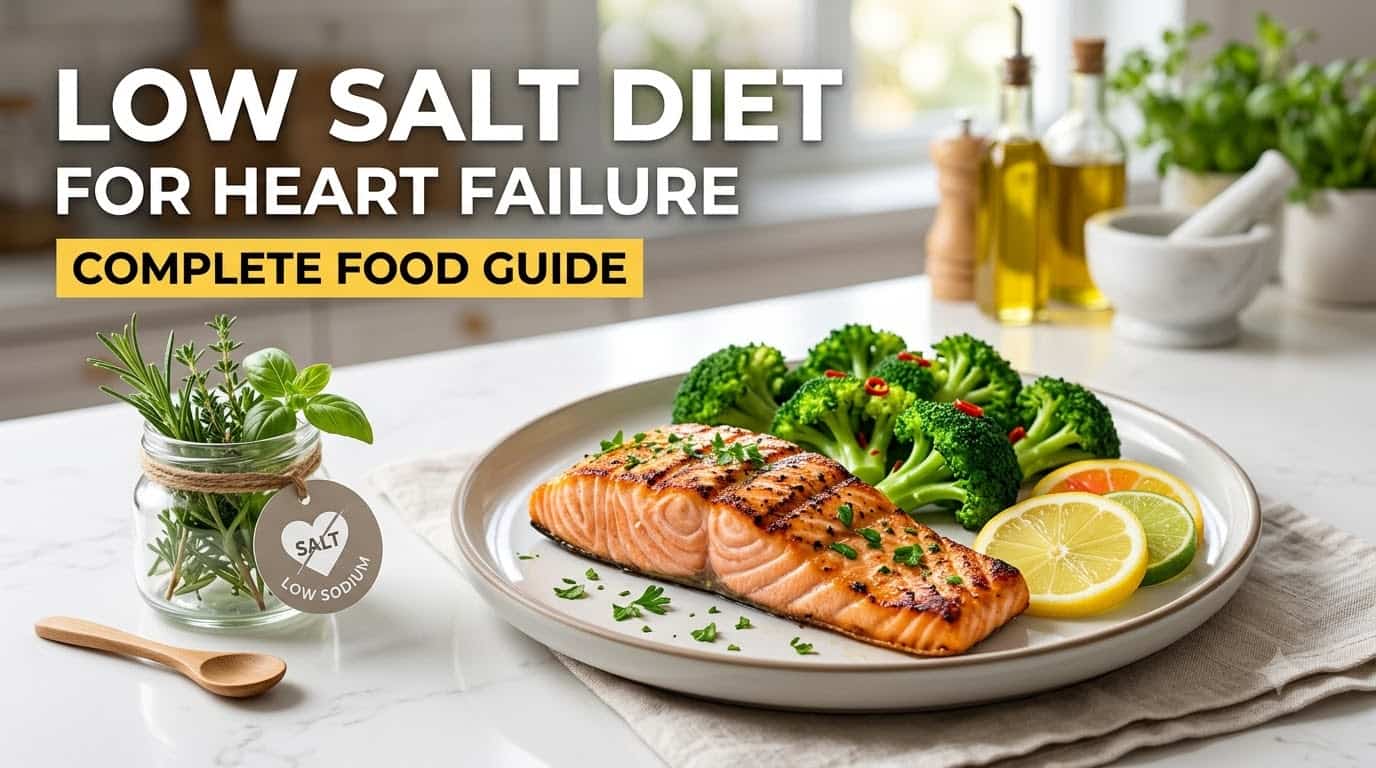
Living with heart failure often means paying closer attention to everyday habits, including what you eat and drink. One topic that many people hear about is a low salt diet for heart failure.
Salt contains sodium, and sodium can affect how the body handles fluid. For some people with heart failure, too much sodium may contribute to fluid buildup and worsening congestion. This can make symptoms such as swelling and shortness of breath more difficult to manage. Heart failure guidelines consider avoiding excessive sodium intake reasonable for helping reduce congestive symptoms.
However, there is an important point to understand: there is no single sodium limit that is right for every person with heart failure. Your doctor, cardiologist, nurse, or dietitian may give you a specific target based on your symptoms, medicines, kidney function, and overall health.
A low-salt eating plan should therefore be part of your personal heart failure care plan, not a reason to make extreme dietary changes without medical advice.
This guide explains how a low salt diet for heart failure works, which foods commonly contain large amounts of sodium, how to read food labels, practical cooking tips, common myths, and simple ways to make lower-sodium meals more enjoyable.
Best Vegan B12 Supplement Guide – What You Need to Know
What Does a Low Salt Diet Mean?
People often use the words salt and sodium as if they mean exactly the same thing. They are related, but they are not identical.
Table salt contains sodium chloride. Sodium is the part that appears on nutrition labels.
When following a lower-sodium eating plan, it is important to look at the amount of sodium in food, not simply whether a package says that it contains salt.
Sodium can be found in:
- Table salt
- Packaged foods
- Restaurant meals
- Processed meats
- Canned soups
- Sauces
- Pickles
- Instant foods
- Snack foods
- Seasoning mixes
- Some breads and baked products
The American Heart Association notes that much of the sodium in modern diets comes from packaged, prepared, and restaurant foods rather than only from salt added at the table.
This means that removing the salt shaker from the dining table may not be enough.
Learning where sodium comes from is an important part of following a low salt diet for heart failure.
Yumi Baby Food – Prepared Baby Meals, Textures, and Nutrition
Why Is Sodium Important in Heart Failure?
Sodium is a mineral that the body needs in small amounts.
The problem is not that sodium is completely unnecessary. The concern is excessive intake and how it can affect fluid balance.
For people with heart failure, fluid buildup can be an important issue. Excess salt may contribute to water buildup, increasing the amount of fluid in the blood vessels and making the heart work harder. Fluid buildup can contribute to symptoms such as edema and shortness of breath.
This is one reason healthcare professionals may recommend reducing sodium.
A lower-sodium diet is not a cure for heart failure. It is one part of managing the condition alongside prescribed medicines, monitoring, medical appointments, and other lifestyle recommendations.
Never stop or change heart failure medication because you have started eating less salt.
Best Tea for Fat Loss – A Simple Guide to Fat Loss
How Much Sodium Should Someone With Heart Failure Eat?
This question does not have one simple answer.
The 2022 AHA/ACC/HFSA heart failure guideline states that avoiding excessive sodium intake is reasonable for people with stage C heart failure to help reduce congestive symptoms. However, the guideline also notes uncertainty about the ideal sodium threshold for all heart failure patients.
For general cardiovascular health, the American Heart Association recommends no more than 2,300 mg of sodium per day and identifies 1,500 mg as an optimal goal for most adults. However, this general recommendation is not automatically the correct prescription for every person with heart failure.
Some heart failure education materials mention lower targets for certain people, while more severe or complex heart failure may require individualized advice.
The safest approach is simple:
Ask your healthcare team what sodium limit is appropriate for you.
Your needs may depend on:
- The type and severity of heart failure
- Whether you have fluid retention
- Kidney function
- Blood pressure
- Medicines you take
- Potassium levels
- Your overall nutritional status
Do not assume that eating as little sodium as possible is always better.
Foods That Can Be High in Sodium
Many foods taste salty, but some foods contain large amounts of sodium without tasting extremely salty.
Common high-sodium foods include:
Processed Meats
Examples include:
- Sausages
- Bacon
- Ham
- Salami
- Packaged deli meats
These foods can contain significant sodium because salt is often used during processing and preservation.
Instant and Packaged Foods
Be careful with:
- Instant noodles
- Ready-made soups
- Frozen meals
- Packaged pasta meals
- Instant rice dishes
Convenient foods are not always high in sodium, but labels should be checked.
Salty Snacks
Examples include:
- Chips
- Salted nuts
- Crackers
- Salted popcorn
Pickled and Brined Foods
Foods preserved in salty liquid can contain substantial sodium.
Examples include:
- Pickles
- Olives
- Some preserved vegetables
Sauces and Condiments
Common sources include:
- Soy sauce
- Ketchup
- Bottled sauces
- Salad dressings
- Gravy
- Ready-made curry sauces
The American Heart Association specifically advises paying attention to foods described as pickled, brined, cured, smoked, or prepared with soy sauce and similar salty sauces.
Best Organic Baby Food: What Parents Should Know
Learn How to Read Sodium Labels
Reading nutrition labels is one of the most useful skills when following a low salt diet for heart failure.
Look for:
Sodium per serving
Also check:
How many servings are in the package
A package may look like one serving but actually contain two or more servings.
For example, if one serving contains 300 mg of sodium and you eat two servings, you consume 600 mg.
The American Heart Association also explains several common label terms:
- Sodium-free: less than 5 mg per serving
- Very low sodium: 35 mg or less per serving
- Low sodium: 140 mg or less per serving
- Reduced sodium: at least 25% less sodium than the regular version
- No salt added: no salt added during processing, but the food may still contain natural sodium
An important point is that reduced sodium does not necessarily mean low sodium.
Always compare the actual numbers.
Best Food Replacement Shakes for Weight Loss
A Simple Low-Sodium Shopping Strategy
Shopping becomes easier when you have a plan.
Buy More Fresh Foods
Fresh foods are often easier to control because you decide how they are prepared.
Examples include:
- Fresh vegetables
- Fresh fruits
- Plain grains
- Fresh meat or fish when appropriate
- Dry beans and lentils
- Unsalted nuts
Compare Different Brands
Two products that look almost identical may contain very different amounts of sodium.
Compare:
- Bread
- Soups
- Cereal
- Sauces
- Canned foods
Choose the option that best fits your sodium plan.
Choose Unsalted When Possible
Look for products such as:
- Unsalted nuts
- No-salt-added vegetables
- Lower-sodium broth
Check Canned Foods
Canned beans and vegetables can be convenient.
The American Heart Association notes that draining and rinsing canned beans and vegetables may reduce sodium.
However, the product label is still useful because sodium levels vary.
Cooking Without Adding Too Much Salt
Many people worry that low-sodium food will taste bland.
Fortunately, salt is not the only way to add flavor.
Try:
- Garlic
- Ginger
- Black pepper
- Lemon juice
- Lime juice
- Herbs
- Fresh coriander
- Basil
- Turmeric
- Cumin
- Paprika
- Vinegar
- Onion
Roasting, grilling, sautéing, and other cooking methods can also bring out natural flavor.
The American Heart Association recommends cooking methods and ingredients that enhance flavor without relying heavily on salt.
Example: Flavoring Vegetables
Instead of adding a large amount of salt, try:
- Garlic
- Lemon juice
- Black pepper
- Herbs
Example: Flavoring Rice
Instead of adding salt during cooking, use:
- Herbs
- Vegetables
- Garlic
- Unsalted spices
The goal is not to make food tasteless.
The goal is to build flavor in different ways.
Give Your Taste Buds Time to Adjust
If you are used to salty food, lower-sodium meals may initially taste different.
This does not mean you will dislike them forever.
The American Heart Association notes that taste preferences can adjust over time, and people may gradually begin to prefer foods with less sodium.
A gradual change may be easier for some people.
For example:
- Stop automatically adding salt before tasting food.
- Choose lower-sodium versions of common foods.
- Cook more meals at home.
- Reduce salty sauces and seasoning mixes.
- Experiment with herbs and spices.
Small changes can become part of your normal routine.
What About Salt Substitutes?
Salt substitutes may replace some or all sodium with potassium.
This can sound like a simple solution, but people with heart failure should be careful.
The American Heart Association warns that certain medical conditions and medications can affect potassium levels. Kidney disease and some heart failure medicines can increase the risk of high potassium.
NICE specifically advises people with heart failure to avoid salt substitutes that contain potassium.
Therefore:
Do not start using a potassium-based salt substitute without discussing it with your healthcare professional.
This is especially important if you:
- Have kidney problems
- Take medicines that affect potassium
- Have previously had high potassium levels
A Heart-Healthy Eating Pattern Matters Too
A low salt diet for heart failure should not focus only on removing sodium.
Overall diet quality also matters.
The American Heart Association recommends a heart-healthy eating pattern that emphasizes:
- Fruits
- Vegetables
- Whole grains
- Nuts and legumes
- Fish and poultry when appropriate
- Low-fat or fat-free dairy products
It also recommends limiting sodium, saturated fat, processed meats, sweets, and sugary beverages.
Your diet should provide enough calories and nutrients.
A very restrictive diet that causes poor nutrition is not automatically healthier.
Sample Low-Sodium Meal Ideas
These are general ideas only. Your individual meal plan may need to be adjusted for medical conditions such as kidney disease or diabetes.
Breakfast
Possible options include:
- Oatmeal with fruit
- Plain yogurt with fruit if suitable for your diet
- Eggs prepared without adding excessive salt
- Whole-grain toast with low-sodium toppings
Lunch
Possible options include:
- Homemade vegetable and lentil soup using low-sodium ingredients
- A salad with fresh vegetables and a homemade dressing
- Whole grains with vegetables and a suitable protein source
Dinner
Possible options include:
- Grilled fish or skinless poultry with vegetables
- Lentils and whole grains prepared with herbs and spices
- Vegetable-based meals made with minimal added salt
Snacks
Possible options include:
- Fresh fruit
- Unsalted nuts if appropriate
- Fresh vegetables
Remember that portion sizes and individual dietary needs also matter.
Eating at Restaurants on a Low-Salt Diet
Restaurant meals can be challenging because you may not control how food is prepared.
Helpful strategies include:
- Ask if your meal can be prepared without extra salt.
- Request sauces and dressings on the side.
- Choose grilled, baked, roasted, or steamed foods when suitable.
- Ask for nutrition information when available.
- Avoid adding extra salt before tasting the food.
The American Heart Association recommends asking for dishes without extra salt and requesting sauces and dressings on the side.
You do not need to avoid restaurants completely.
Planning ahead can help.
Common Myths About a Low Salt Diet for Heart Failure
Myth 1: I Only Need to Stop Using Table Salt
False.
A large amount of dietary sodium can come from packaged, prepared, and restaurant foods.
Myth 2: Sea Salt Is Automatically Better for Heart Failure
Sea salt may sound healthier, but it still contains sodium.
The amount and type of salt used should fit your healthcare team’s recommendations.
Myth 3: Reduced Sodium Means I Can Eat Unlimited Amounts
False.
A reduced-sodium product simply has less sodium than its regular version.
Always check the actual sodium amount and serving size.
Myth 4: Low-Sodium Food Must Taste Bad
Not necessarily.
Herbs, spices, garlic, lemon, vinegar, and good cooking techniques can add plenty of flavor.
Myth 5: Potassium Salt Is Always Safe
False.
Potassium-based salt substitutes can be risky for some people with heart failure, kidney problems, or certain medications.
Myth 6: Everyone With Heart Failure Needs the Same Sodium Limit
False.
Heart failure is a complex condition, and dietary advice may need to be individualized. Current guidelines recognize the importance of avoiding excessive sodium while also acknowledging uncertainty about one ideal target for every patient.
Should You Restrict Fluids Too?
A low salt diet and fluid restriction are not the same thing.
Some people with heart failure may receive instructions about how much fluid to drink, while others may not need strict fluid restriction.
NICE advises against routinely restricting fluid for every person with heart failure and recommends considering individual circumstances, such as dilutional hyponatremia or high fluid consumption.
Do not decide on your own to drink very little water.
Ask your healthcare team whether you have a specific daily fluid target.
How to Make Low-Sodium Eating Easier
Try these practical habits:
Plan Your Meals
Planning meals reduces the temptation to rely on highly processed convenience foods.
Cook Extra Food
Prepare a larger batch of a lower-sodium meal and store portions safely for later.
Keep Simple Foods Available
Examples include:
- Fresh fruit
- Vegetables
- Plain grains
- Beans
- Unsalted snacks
Check Your Favorite Foods
You do not have to change your entire diet overnight.
Start by checking the sodium content of foods you eat most often.
You may discover that one or two items contribute a large amount of sodium.
Keep a Simple Food Record
For a few days, write down:
- What you ate
- Serving size
- Sodium per serving
This can help you identify your biggest sources of sodium.
When Should You Contact Your Healthcare Team?
Heart failure symptoms should not be managed by diet alone.
Contact your healthcare team according to the instructions they have given you if you notice changes such as:
- Increasing swelling
- Increasing shortness of breath
- Rapid or unexplained weight changes
- Worsening fatigue
- Other new or worsening symptoms
If you have severe breathing difficulty, chest pain, fainting, or other emergency symptoms, seek urgent medical care.
A low-sodium diet is supportive care. It does not replace medical treatment.
For more general healthy eating information, you can also explore related nutrition articles on Helping99.com.
Conclusion
A low salt diet for heart failure can be an important part of managing sodium intake and supporting a heart-healthy lifestyle. Excess sodium may contribute to fluid buildup and congestive symptoms in some people, which is why heart failure guidelines recommend avoiding excessive sodium intake.
The most important lesson is that there is no one-size-fits-all sodium target for every person with heart failure.
Your doctor or healthcare team can provide advice based on your individual health, symptoms, medicines, and kidney function.
Start with practical steps: read food labels, compare products, cook more meals at home, use herbs and spices for flavor, and be careful with processed foods and restaurant meals.
Avoid extreme restrictions unless your healthcare professional recommends them, and do not use potassium-based salt substitutes without medical advice.
Small, consistent changes can make a lower-sodium eating pattern easier to maintain while still allowing you to enjoy satisfying and flavorful meals.
Frequently Asked Questions About a Low Salt Diet for Heart Failure
How much salt can a person with heart failure eat?
There is no single answer for everyone. Your healthcare team may recommend a specific sodium limit based on your heart failure, symptoms, medicines, kidney function, and other health needs. Avoid excessive sodium and follow your personal medical advice.
Is sea salt better than regular table salt?
Sea salt still contains sodium. Do not assume that a different type of salt makes it automatically suitable for heart failure.
What foods should I avoid on a low-sodium diet?
Common high-sodium foods include processed meats, instant foods, canned soups, salty snacks, pickled foods, and salty sauces. However, you do not necessarily have to avoid every one of these foods completely; follow your individual sodium plan.
Can I use a salt substitute?
Do not use potassium-based salt substitutes without checking with your healthcare professional. Some people with heart failure or kidney problems may be at risk of high potassium.
Can I eat restaurant food with heart failure?
Yes, but restaurant meals can contain a lot of sodium. Ask for meals without extra salt when possible, request sauces on the side, and choose simpler preparations.
Does a low-sodium diet cure heart failure?
No. A lower-sodium eating plan is not a cure. It may be one part of a broader heart failure management plan.
Do I need to restrict how much water I drink?
Not everyone with heart failure needs the same fluid restriction. Ask your healthcare team for personalized advice.
How can I make food taste good without salt?
Use herbs, spices, garlic, onion, lemon, lime, vinegar, and cooking methods such as roasting and grilling to build flavor.
Best Free Artificial Intelligence Tools | 100% Free Tools