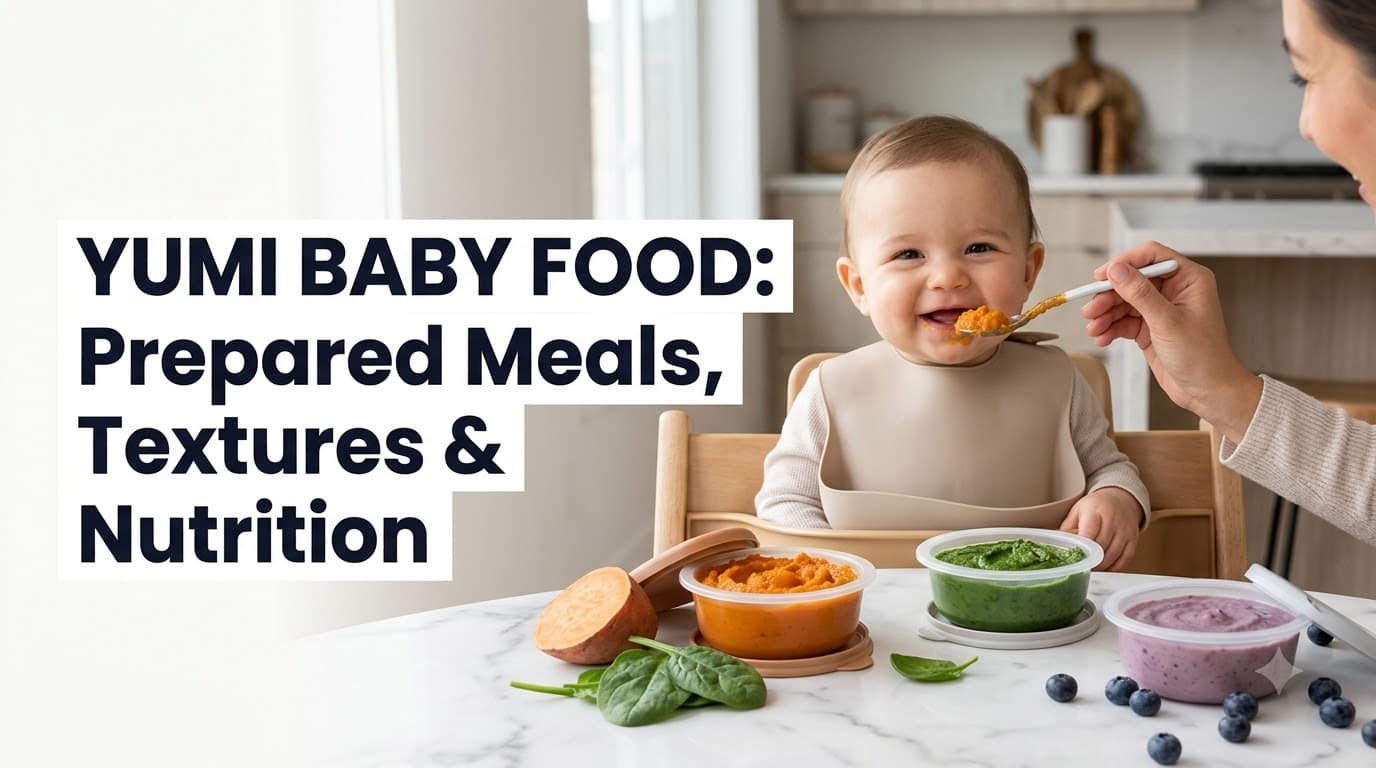
Choosing food for a baby can feel exciting, but it can also be confusing. Parents are often faced with many options, including homemade purees, supermarket baby food, finger foods, and subscription-based prepared meals. Yumi baby food is a name that many parents may come across when looking for prepared food designed for babies and young children.
Before choosing any baby food brand, it is helpful to understand what the product offers, how it fits into a child’s overall diet, and what parents should check before serving it. No single brand is automatically the right choice for every family or every child.
A baby’s nutritional needs, developmental stage, feeding skills, allergies, medical history, and family preferences can all affect food choices.
This guide explains what Yumi baby food is, the types of foods associated with the brand, the importance of developmental stages and textures, what parents should consider before buying prepared baby food, and common misconceptions about feeding babies.
The goal is not to say that one product is perfect for every child. Instead, the goal is to help parents understand how to evaluate baby food carefully and make informed decisions.
What Is Yumi Baby Food?
Yumi is a children’s food brand that has offered prepared foods and snacks designed around different stages of early childhood. Its official information has described products using organic ingredients and stage-based food options, including foods for babies beginning solids and products for older children.
Older Yumi product information describes baby food organized into stages with changes in ingredients and texture as babies develop feeding skills. For example, earlier stages included smoother foods, while later stages introduced more texture and small pieces of food.
However, food products and brand offerings can change over time. Before purchasing any product, parents should check the current:
- Product label
- Ingredients
- Age guidance
- Allergen information
- Storage instructions
- Preparation instructions
The product label should always take priority over general information found online.
Best Tea for Fat Loss – A Simple Guide to Fat Loss
Why do parents choose ready-made baby food?
Prepared baby food can be attractive because it may save time.
Parents of young children often have busy schedules. Preparing every baby meal from scratch may not always be practical.
A prepared baby food option may provide convenience when:
- Parents are busy.
- Families are traveling.
- Cooking time is limited.
- Parents want ready-to-serve food.
- A family wants additional variety in a baby’s meals.
Convenience can be valuable, but convenience alone does not determine whether a food is suitable for a particular baby.
The ingredients, texture, safety, and developmental appropriateness are also important.
Best Organic Baby Food: What Parents Should Know
Yumi Baby Food and Different Feeding Stages
Babies do not eat exactly the same type of food at every age.
A baby beginning solid foods has different feeding skills from an older baby who can handle more texture.
Stage-based food programs are designed around this general idea.
Yumi’s previously published menu information described stages beginning with thinner single-ingredient purees for babies starting solids and progressing toward multi-ingredient foods and more textured options.
This approach reflects an important general principle: food texture should be appropriate for a child’s individual development and feeding abilities.
Early Solid Foods
Early solid foods may be smooth and simple.
Parents may introduce foods gradually according to appropriate feeding guidance for their child.
Some babies start with purees, while others may follow different approaches to introducing soft, appropriately prepared foods.
There is no need to assume that every baby must follow exactly the same food sequence.
Moving Toward More Texture
As babies develop feeding skills, they may gradually experience different textures.
Yumi’s older stage information included smooth foods, textured foods, and later small pieces intended for more advanced self-feeding skills.
Texture progression is important because feeding is not only about nutrition. Babies are also learning how to:
- Move food in their mouth.
- Chew appropriately.
- Handle different textures.
- Feed themselves.
- Explore new flavors.
Parents should consider their child’s individual readiness rather than relying only on an age printed on a package.
When Is a Baby Ready for Solid Food?
The decision to begin solid foods should be based on developmental readiness and guidance from a qualified healthcare professional.
Signs commonly considered when assessing readiness can include the ability to sit with appropriate support and control the head and neck, as well as the ability to handle food developmentally.
Yumi’s published baby-led feeding guidance also lists signs such as sitting without support, grasping objects and bringing them to the mouth, and other developmental feeding abilities.
However, online checklists cannot replace individualized advice from a pediatrician or another qualified healthcare professional.
If you are unsure whether your baby is ready for solid foods, ask your child’s healthcare provider.
What Ingredients Should Parents Look At?
The ingredient list is one of the most useful places to start.
Parents should know what is in every food offered to their child.
Look at:
- Main ingredients
- Potential allergens
- Added sugar
- Salt or sodium
- Product instructions
- Serving guidance
- Storage information
Yumi’s official information has described organic ingredients and, for some products, no added sugar. However, exact ingredients and product characteristics can vary between products, so parents should always read the specific package they are buying.
Do not assume that all products from the same company have identical ingredients.
Ikaria Lean Belly Juice for Weight Loss – What to Know
Organic Baby Food: What Does It Mean?
Organic is a term that many parents look for when shopping for baby food.
However, the word organic does not automatically answer every nutritional question.
Parents should still consider:
- What foods are included?
- Is the product appropriate for the baby’s stage?
- What is the texture?
- Are there allergens?
- Does it fit the child’s overall diet?
Yumi has described its products as using organic ingredients.
But whether a food is organic or not, variety and overall nutritional quality remain important considerations.
A child’s diet should not depend on a single food, flavor, or brand.
The Importance of Food Variety
Offering a variety of appropriate foods can help babies experience different tastes and textures.
A varied diet may include foods from different groups as appropriate for the child’s age and needs.
Examples can include:
- Vegetables
- Fruits
- Beans and lentils
- Eggs
- Other suitable protein-rich foods
- Grains
- Foods containing healthy fats
The exact choices will depend on family preferences, cultural foods, allergies, and individual dietary needs.
A prepared baby food service may introduce parents to ingredient combinations they would not normally prepare themselves.
However, prepared foods do not need to replace family foods completely.
Many babies can gradually participate in family meals when foods are prepared safely and appropriately for their developmental stage.
Convenience vs Homemade Baby Food
Both prepared and homemade baby food can have a place in family life.
Benefits of Prepared Baby Food
Prepared food may:
- Save time.
- Reduce cooking and preparation work.
- Provide convenient meal options.
- Offer ingredient combinations.
- Help parents manage busy schedules.
Benefits of Homemade Baby Food
Homemade foods can:
- Be adapted to family meals.
- Allow parents to choose every ingredient.
- Potentially cost less depending on ingredients and location.
- Help babies experience foods regularly eaten by the family.
Neither option needs to be treated as the only correct approach.
Many families use both.
For example, a parent may prepare most meals at home but use prepared food when traveling or during busy periods.
Is Fresh Always Better?
Not necessarily in every situation.
Freshness is often used as a marketing term, but the nutritional suitability and safety of food depend on more than one word.
The important questions include:
- Is the food stored safely?
- Is it appropriate for the child?
- Does it contain suitable ingredients?
- Is the texture safe for the baby’s feeding abilities?
- Has it been prepared according to instructions?
Yumi has promoted fresh prepared meals as part of its brand offering.
However, parents should avoid assuming that “fresh” automatically means a product is suitable for every baby.
Always read the specific product information.
Yumi Baby Food and Texture
Texture is an important part of learning to eat.
A baby who only eats one type of very smooth food forever may not gain experience with other appropriate textures.
As feeding skills develop, babies may gradually move toward more textured foods and appropriately prepared finger foods.
Yumi’s published stage descriptions have included a progression from smooth foods to more textured options and foods intended for developing self-feeding skills.
Parents should always make sure food is prepared in a way that reduces choking hazards and is appropriate for the individual child’s skills.
Do not introduce a food simply because it is recommended for a certain age if your child is not developmentally ready.
Yumi and Baby-Led Weaning
Some families are interested in baby-led approaches to introducing food.
Baby-led feeding approaches generally involve allowing babies to explore appropriately prepared foods and participate actively in feeding.
Yumi has published information about finger foods and self-feeding, including products intended for babies developing the ability to grasp and handle food.
However, baby-led feeding does not mean simply giving a baby any adult food.
Food preparation, texture, size, and the baby’s developmental abilities are important.
Parents should seek professional advice if they are unsure about safe feeding practices.
Food Allergies and Baby Food
Allergy information is extremely important.
A product may contain ingredients that are unsuitable for some children.
Yumi’s terms have advised parents to check complete ingredient information and seek medical advice when appropriate for a child with allergies. The company’s published terms also note that commercial food environments can handle different food allergens.
Before offering any prepared food:
- Read the complete ingredient list.
- Review allergen information.
- Follow appropriate medical guidance if your child has a known allergy.
- Contact a healthcare professional if you have concerns about introducing foods.
Do not rely only on front-of-package marketing.
The full ingredient and allergen information matters.
Common Myths About Baby Food
Myth 1: Expensive Baby Food Is Always Better
Price does not automatically determine nutritional quality.
A higher-priced product may offer convenience or specific ingredients, but parents should still evaluate the food carefully.
Myth 2: Organic Means Every Product Is Perfect
Organic ingredients can be important to some families, but the full nutritional picture still matters.
Check the ingredients and suitability for your child.
Myth 3: Babies Should Eat Only Purees
Babies may begin with smooth foods, but feeding development can involve exposure to different appropriate textures as skills develop.
Every child develops differently.
Myth 4: Prepared Baby Food Is Always Worse Than Homemade Food
Prepared baby food can be convenient and nutritionally useful.
Homemade food can also be an excellent choice.
The important factors include safety, variety, ingredients, and developmental appropriateness.
Myth 5: Babies Need to Finish Every Serving
Babies have their own hunger and fullness signals.
Parents should not force a baby to finish food simply because it is in a container.
Responsive feeding can involve paying attention to signs of hunger and fullness.
How to Choose Baby Food Carefully
When comparing Yumi baby food or any other baby food, use a simple checklist.
Check the Ingredients
Understand what your child is eating.
Check the Recommended Stage
Make sure the texture and food are appropriate for your baby’s development.
Check for Allergens
Review the complete allergen information carefully.
Follow Storage Instructions
Prepared foods can have specific refrigeration and storage requirements.
Follow the package instructions.
Consider Your Budget
Convenient prepared baby food may cost more than homemade food.
Choose an approach that is realistic for your family.
Do Not Depend on One Brand
Food variety is important.
A brand can be one option without becoming the only food source.
A Practical Feeding Example
Imagine a family with a busy schedule.
They might use:
- Homemade food for many family meals.
- A prepared baby food option on busy days.
- Soft, appropriate family foods when suitable.
- Different ingredients and textures over time.
This may be more practical than following an all-or-nothing approach.
The goal is to build a healthy and realistic feeding routine.
For more general articles about healthy foods and nutrition, readers can also explore relevant content on Helping99.com.
Questions to Ask Before Buying Yumi Baby Food
Before placing an order or purchasing a product, consider these questions:
- Is this product currently available in my area?
- Is it suitable for my child’s developmental stage?
- What are the exact ingredients?
- Are there potential allergens?
- How should the food be stored?
- How long does it remain safe after opening?
- What is the cost per meal or serving?
- Does my child need a different texture?
These questions can help you make a practical decision rather than buying based only on advertising.
When Should Parents Seek Professional Advice?
Speak with a pediatrician or qualified healthcare professional if your child:
- Has difficulty eating.
- Has trouble swallowing.
- Is not growing as expected.
- Has a known food allergy.
- Has a medical condition affecting nutrition.
- Has frequent concerning reactions to food.
- Has significant feeding difficulties.
Online articles and brand websites can provide general information, but they cannot evaluate an individual child’s health needs.
Conclusion
Yumi baby food may be an option for parents looking for convenient prepared foods for babies and young children. The brand has described stage-based products, organic ingredients, and different food textures designed around early childhood development.
However, the most important decision is not simply choosing a brand.
Parents should consider the individual child, including developmental readiness, feeding skills, allergies, nutritional needs, and food preferences.
Always check the current product label for ingredients, allergens, storage instructions, and age guidance.
Prepared baby food can be useful, homemade food can also be excellent, and many families combine both approaches.
A balanced feeding routine should focus on safe food preparation, appropriate textures, food variety, and responding to the child’s individual needs. When questions or concerns arise, a qualified healthcare professional can provide guidance based on the child rather than general information online.
Frequently Asked Questions About Yumi Baby Food
What is Yumi baby food?
Yumi is a children’s food brand that has offered prepared foods and snacks designed for different stages of early childhood. Its offerings and products can change, so check the current official product information before purchasing.
Is Yumi baby food organic?
Yumi’s official information describes its products as using organic ingredients. However, parents should check the label of the specific product they are buying because ingredients and products may vary.
What age can a baby eat Yumi food?
The appropriate age depends on the specific product and the child’s developmental readiness. Older Yumi menu information described early-stage foods beginning around six months, but parents should follow current product instructions and seek professional advice when uncertain.
Is Yumi better than homemade baby food?
Neither option is automatically better for every family. Homemade food can provide flexibility, while prepared food can provide convenience. Safety, ingredients, nutritional suitability, and appropriate texture are important in both cases.
Does Yumi baby food contain allergens?
Parents should always check the complete ingredient and allergen information for each product. If a child has a food allergy, seek appropriate medical advice before introducing new products.
Can Yumi baby food replace all homemade meals?
Prepared food may be part of a baby’s diet, but variety is important. Many families combine prepared food with appropriate homemade and family foods.
How should Yumi baby food be stored?
Follow the storage and handling instructions printed on the specific product. Do not rely on general online advice because products and packaging may differ.
Should I ask my pediatrician before starting solid foods?
If you are unsure whether your baby is ready for solid foods or have concerns about feeding, speaking with your child’s pediatrician or another qualified healthcare professional is a sensible step.
Best Free Artificial Intelligence Tools | 100% Free Tools