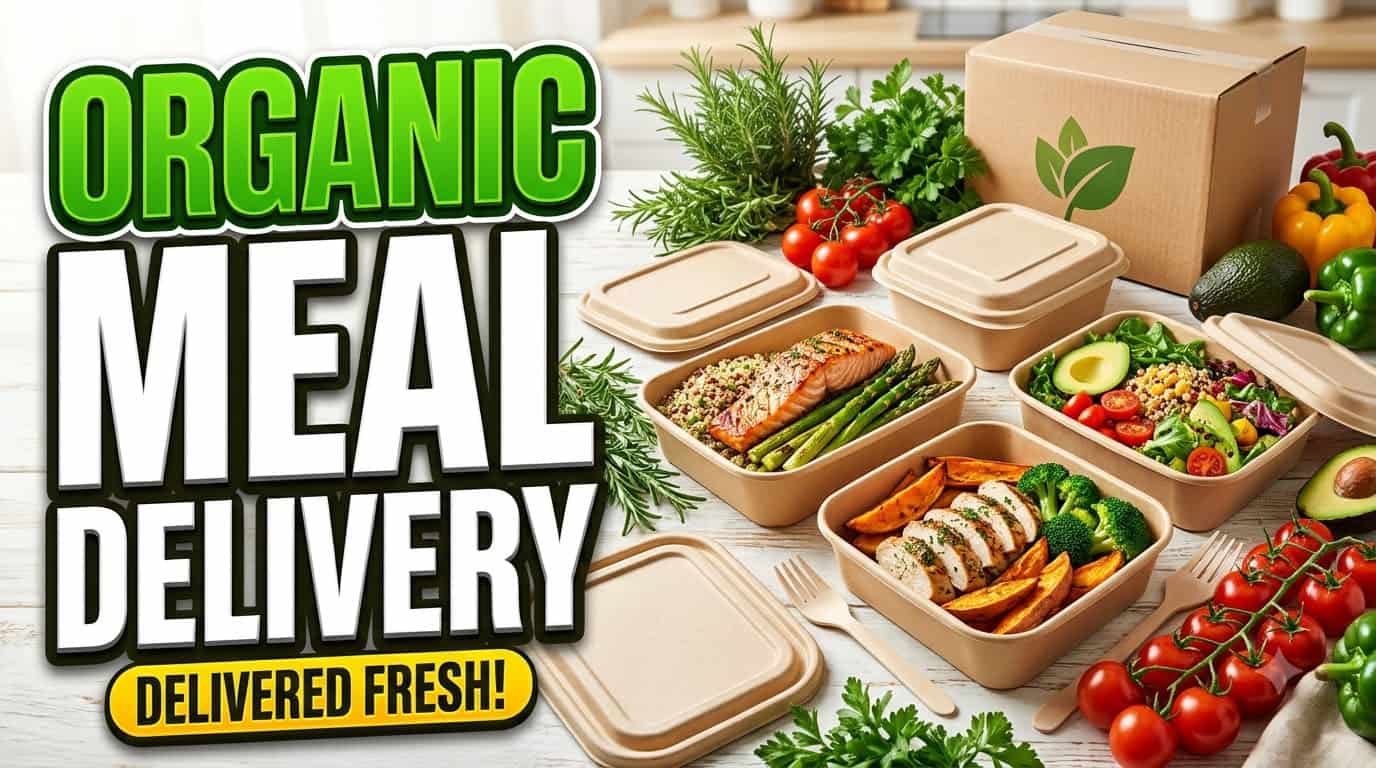
Eating healthy sounds simple until everyday responsibilities get in the way. Between work, family commitments, shopping, cooking, and cleaning, preparing balanced meals every day can become difficult. As a result, many people rely on restaurant food, packaged snacks, or quick meals that may not match their nutritional preferences.
Organic prepared meal delivery offers another option. These services prepare meals in advance using ingredients that may include organically grown vegetables, fruits, grains, beans, and other foods. Instead of buying ingredients and cooking everything yourself, you receive prepared meals that are ready to eat or require only a little heating.
For people who want convenient meals without giving up their interest in organic ingredients, this type of service can be appealing. However, not all meal delivery companies offer the same quality, ingredients, portion sizes, or nutritional value.
This guide explains what organic prepared meal delivery means, how it works, its possible benefits and limitations, what to look for before ordering, and how to decide whether it fits your lifestyle and budget.
Sakara Life Meals Review Menu, Benefits, Cost
What Is Organic Prepared Meal Delivery?
Organic prepared meal delivery is a food service that prepares meals using ingredients marketed or certified as organic and delivers the finished meals to customers.
Unlike traditional meal kits, which usually provide ingredients and recipes that customers cook themselves, prepared meal services do most of the cooking before delivery.
Depending on the company, meals may arrive:
- Fully cooked and ready to eat
- Refrigerated and requiring reheating
- Frozen for longer storage
- Packaged as individual portions
- Arranged as breakfast, lunch, dinner, or complete meal plans
The main difference is convenience. You do not need to plan every recipe, shop for all the ingredients, or spend time preparing each dish.
However, the word “organic” deserves attention. It generally refers to how agricultural ingredients are produced and handled under a particular organic standard. It does not automatically mean that a meal is low in calories, high in protein, low in sodium, or nutritionally balanced.
A good organic prepared meal should offer both ingredient transparency and a suitable nutritional profile.
Organic Meal Prep Delivery How to Choose the Right Service
How Does Organic Meal Delivery Work?
Most organic prepared meal delivery services follow a straightforward process. The exact steps depend on the provider, but the general experience is similar.
1. Choose a Meal Delivery Service
Start by comparing companies that deliver to your area. Some specialize in organic ingredients, while others offer a mixture of conventional and organic foods.
Check the company’s website for information about:
- Ingredient sourcing
- Organic certification
- Meal preparation
- Delivery locations
- Menu choices
- Dietary options
- Food storage instructions
- Subscription and cancellation terms
Do not assume that every meal offered by a company is entirely organic. Some services use organic ingredients for selected meals or individual components only.
2. Select Your Meal Preferences
Many services allow customers to choose meals based on their eating habits.
Common options include:
- Vegetarian meals
- Vegan meals
- High-protein meals
- Gluten-free options
- Dairy-free meals
- Low-carbohydrate meals
- Family-friendly meals
- Balanced everyday meals
The available choices vary by provider. If you have a food allergy or medical dietary requirement, review the ingredient information carefully and contact the company before ordering.
3. Select Your Delivery Schedule
Some companies offer weekly subscriptions, while others allow one-time orders.
You may be able to select a particular number of meals, serving sizes, or delivery days. Consider how many meals you actually need.
For example, if you usually cook dinner at home but struggle to prepare lunch during workdays, ordering five lunches may be more practical than purchasing a complete meal plan.
4. Receive and Store Your Meals
Prepared meals may arrive chilled, frozen, or packaged for a specific storage period.
Follow the storage instructions printed on the packaging. Check the use-by dates and refrigerate or freeze the meals as directed.
Do not leave perishable meals at room temperature longer than recommended. When reheating, follow the company’s instructions and make sure the food is heated safely.
5. Enjoy Meals With Minimal Preparation
One of the biggest attractions of prepared meal delivery is that it reduces cooking time.
Some meals can be eaten directly after opening, while others need to be heated in a microwave or oven.
This makes them useful for busy workdays, travel preparation, or periods when cooking regularly is difficult.
Best Prepared Vegan Meal Delivery Guide for Healthy Eating
What Types of Organic Prepared Meals Are Available?
Organic meal delivery menus can include a wide range of dishes. The exact choices depend on the company, its ingredient suppliers, and the season.
Here are some common meal categories.
Organic Breakfast Meals
Breakfast options may include:
- Oatmeal with fresh fruit
- Overnight oats
- Vegetable breakfast bowls
- Organic yogurt with berries
- Chia seed pudding
- Whole-grain breakfast dishes
- Egg-based meals
A useful breakfast should provide enough energy for your morning routine. Depending on your needs, you may want a combination of protein, fiber, and carbohydrates.
For example, oatmeal with fruit and nuts provides a different nutrient combination from a breakfast made mainly of sweetened cereal.
Organic Lunch Meals
Lunch menus often include salads, grain bowls, wraps, vegetable dishes, and protein-based meals.
Examples include:
- Quinoa and roasted vegetable bowls
- Chickpea salads
- Lentil and vegetable dishes
- Brown rice bowls
- Grilled chicken with vegetables
- Tofu and vegetable meals
A balanced lunch can help you feel satisfied through the afternoon. Look for a suitable protein source, vegetables, and an appropriate carbohydrate portion.
Organic Dinner Meals
Dinner options may include more filling combinations such as:
- Vegetable and lentil curry
- Brown rice with beans
- Roasted vegetables with chicken
- Baked fish with seasonal vegetables
- Whole-grain pasta with vegetable sauce
- Tofu with quinoa and greens
The best dinner depends on your preferences, appetite, and nutritional needs. There is no single meal combination that works for everyone.
Organic Snacks and Add-Ons
Some prepared meal companies also offer snacks, soups, juices, breakfast items, and other food products.
Examples may include fruit cups, hummus, vegetable snacks, nut mixes, and protein-rich additions.
Check the ingredients and nutrition information rather than assuming every organic snack is automatically a healthy choice.
Organic Cooked Food Delivery – Guide to Healthy Meals
Potential Benefits of Organic Prepared Meal Delivery
Organic prepared meal delivery can make everyday eating more convenient. However, its value depends on the service and how you use it.
1. Saves Time
Planning meals takes more time than many people realize.
You need to decide what to eat, prepare a shopping list, purchase ingredients, cook, and clean up afterward.
Prepared meal delivery reduces several of these steps. Since the meals arrive ready to eat or heat, you can spend less time in the kitchen.
This can be helpful for professionals, parents, students, and people with demanding schedules.
2. Makes Meal Planning Easier
Some people struggle to decide what to cook every day. This can lead to repeated meals or frequent restaurant orders.
A prepared meal service provides a menu in advance. You know what meals are arriving and can organize your schedule around them.
For example, someone who orders weekday lunches can avoid deciding what to eat during a busy workday.
3. Helps Introduce More Food Variety
Some services rotate their menus regularly. This may encourage customers to try vegetables, grains, legumes, and recipes they do not normally prepare.
A varied diet can include different sources of fiber, vitamins, minerals, protein, and healthy fats.
However, menu variety depends on the provider. Review sample menus to see whether the company offers enough choices for your preferences.
4. Can Support Consistent Eating Habits
Having prepared meals available may make it easier to follow a regular eating routine.
For example, a person who often skips lunch because of work may find it easier to eat when a prepared meal is already available.
Consistency does not require following a strict diet. It means finding an eating routine that provides enough food and fits your everyday life.
5. Reduces Some Food Shopping and Preparation
Prepared meal delivery can reduce the number of grocery trips needed for the meals included in your subscription.
It can also reduce the need to purchase many separate ingredients for recipes.
However, you may still need to shop for snacks, drinks, fresh fruit, or other household food items.
6. Offers Access to Organic Ingredients
People who prefer organically produced ingredients may find these services useful.
Instead of researching and purchasing every ingredient separately, customers can choose a provider that explains its organic sourcing practices.
Still, it is important to verify which ingredients are organic and whether the company provides reliable certification information.
Insulin Resistance and Weight Loss – Diet, Exercise and Tips
Are Organic Prepared Meals Healthier?
Organic prepared meals can be part of a healthy eating pattern, but the organic label alone does not determine nutritional quality.
A meal’s nutritional value depends on its ingredients, portions, cooking methods, and overall nutrient composition.
For example, an organic meal can still contain:
- Large amounts of added sugar
- High levels of sodium
- Excessive saturated fat
- Large portions
- Limited protein
- Few vegetables or sources of fiber
Similarly, a meal made with conventionally grown ingredients can still provide a balanced combination of protein, vegetables, whole grains, and healthy fats.
Organic Does Not Automatically Mean Nutritious
This is one of the most important points to understand.
Organic certification generally relates to production and handling standards. It is not a guarantee that a product is lower in calories or better for weight management.
An organic dessert can still contain substantial amounts of sugar. Organic packaged snacks can still be high in calories or sodium.
When choosing prepared meals, evaluate the complete ingredient list and nutrition facts.
Look at the Overall Meal
A useful way to assess a meal is to consider whether it includes a suitable combination of:
- Protein
- Vegetables or fruit
- Fiber-rich carbohydrates
- Healthy fats
- Appropriate portion sizes
For example, a lunch containing lentils, vegetables, brown rice, and a suitable dressing may provide a combination of protein, fiber, and energy.
A meal consisting mainly of refined carbohydrates and a sugary sauce may be less balanced, even if some ingredients are organic.
Can Organic Prepared Meal Delivery Help With Weight Management?
Prepared meal delivery may help some people organize their eating habits, but it does not guarantee weight loss.
Weight management depends on several factors, including total food intake, activity level, sleep, age, health conditions, medications, and individual needs.
A prepared meal service may make certain parts of the process easier.
Portion Awareness
Meals delivered in individual containers can make portion sizes more visible.
This may help people understand how much food they usually eat at lunch or dinner.
However, a pre-portioned meal is not automatically the correct portion for every person. Someone with higher energy needs may require additional food.
Less Unplanned Food Ordering
If you regularly order restaurant food because you do not have time to cook, keeping prepared meals available may reduce some unplanned orders.
This can make your eating routine more predictable.
More Consistent Meal Choices
A service with balanced menu options may help you include vegetables and suitable protein sources more regularly.
But the rest of your diet still matters. Drinks, snacks, desserts, and meals outside the subscription contribute to your overall intake.
Practical Weight-Management Tips
If you are using organic prepared meals as part of a weight-management routine:
- Choose meals that provide enough food for your needs.
- Include protein in your daily meals.
- Eat a variety of vegetables and fruits.
- Pay attention to drinks, sauces, and snacks.
- Avoid unnecessary food restrictions.
- Stay physically active in a way that suits your ability.
- Focus on habits you can maintain over time.
If you have a medical condition or need to lose weight for health reasons, a registered dietitian or healthcare professional can help you choose an appropriate eating plan.
How to Choose the Best Organic Prepared Meal Delivery Service
Not every meal delivery company is equally suitable. Before paying for a subscription, compare the following factors.
1. Check Organic Certification
Look for clear information about organic ingredients and certification.
If a company claims that its meals are organic, find out whether the entire meal is certified organic or whether only selected ingredients meet organic standards.
For example, a meal might contain organic vegetables but conventional grains or sauces.
The exact meaning of organic certification depends on the country and the applicable standard. In the United States, the USDA Organic label is associated with specific production and handling requirements. Other countries have their own certification systems.
Avoid relying only on words such as “natural,” “clean,” or “farm fresh.” These terms do not necessarily mean that a product is certified organic.
2. Review the Ingredient List
A clear ingredient list helps you understand what you are eating.
Look for meals that contain recognizable ingredients and explain the components of sauces, dressings, and seasonings.
Pay attention to:
- Added sugars
- Sodium
- Cooking oils
- Allergens
- Artificial sweeteners, if you prefer to avoid them
- Ingredients that do not suit your dietary needs
Do not judge a meal only by its front-of-package description.
3. Compare Nutrition Information
Check whether the company provides nutrition facts for each meal.
Useful details include:
- Calories
- Protein
- Carbohydrates
- Fiber
- Total fat
- Saturated fat
- Sodium
- Added sugar
This information can help you compare similar meals.
It is particularly important if you are following a nutrition plan recommended by a healthcare professional.
4. Consider Meal Variety
A limited menu may become boring after several weeks.
Check whether the service rotates recipes and offers different ingredients throughout the month.
If you have specific food preferences, make sure there are enough suitable options to avoid repeating the same dishes.
5. Check Portion Sizes
A meal should provide enough food for your needs.
Look at serving sizes and photographs, but remember that photographs may not represent the exact portion you receive.
If the company provides meal weights or serving information, use those details when comparing providers.
6. Understand Delivery and Storage
Before ordering, check:
- Delivery locations
- Delivery days
- Packaging type
- Refrigeration requirements
- Freezer suitability
- Use-by dates
- Delivery fees
A meal service may offer attractive dishes but still be unsuitable if delivery is unreliable or the storage instructions do not fit your routine.
7. Read Subscription and Cancellation Terms
Some companies offer weekly subscriptions that renew automatically.
Understand how to pause, skip, or cancel deliveries before signing up.
Also check whether there are minimum order requirements, delivery fees, or charges for changing an upcoming order.
8. Compare the Total Cost
Do not compare services only by their advertised weekly price.
Calculate the cost per meal, including shipping and any additional fees.
Also consider whether you will need to purchase extra food to complete your meals.
Best Natural Energy Drinks for Energy and Hydration
Organic Prepared Meal Delivery vs. Traditional Meal Kits
Prepared meal services and traditional meal kits are often confused, but they offer different experiences.
| Feature | Organic Prepared Meals | Traditional Meal Kits |
|---|---|---|
| Food preparation | Usually completed before delivery | Customer cooks the meals |
| Cooking time | Often only reheating | Requires preparation and cooking |
| Ingredient control | Depends on the menu | More control during preparation |
| Convenience | High | Moderate |
| Cooking experience | Minimal | Involves following recipes |
| Storage | Refrigerated or frozen, depending on service | Depends on ingredients |
| Cost | Varies by provider | Varies by provider |
Prepared meals are useful when time is limited. Meal kits may be better for people who enjoy cooking but want help with shopping and recipe planning.
Neither option is automatically healthier. The ingredients, portion sizes, and overall nutritional quality matter more than the format.
How Much Does Organic Prepared Meal Delivery Cost?
The price varies depending on the company, number of meals, ingredients, portion sizes, delivery location, and subscription plan.
Organic prepared meal services may cost more than cooking at home because customers are paying for ingredient sourcing, food preparation, packaging, delivery, and convenience.
Factors That Affect the Price
Ingredient quality: Some services use certified organic ingredients, specialty produce, or premium protein sources.
Meal complexity: Meals with several ingredients or more involved preparation may cost more.
Number of meals: Larger orders may have a different cost per serving.
Delivery charges: Some providers include delivery in the advertised price, while others charge separately.
Packaging: Refrigerated and frozen meal packaging can add to operating costs.
How to Keep Costs Under Control
You do not need to order every meal through a delivery service.
Try these practical approaches:
- Order only the meals that are difficult to prepare during your week.
- Compare the price per serving instead of the weekly headline price.
- Look for one-time orders before committing to a subscription.
- Avoid paying for meals you are unlikely to eat.
- Prepare simple breakfasts and snacks at home.
- Check cancellation and renewal terms.
For example, ordering prepared lunches for busy weekdays while cooking dinner at home may provide a useful balance between convenience and cost.
Are Organic Prepared Meals Suitable for Special Diets?
Some services offer meals for specific dietary preferences, but availability and suitability vary.
Vegetarian and Vegan Diets
Plant-based meal services may offer meals made with vegetables, legumes, grains, nuts, seeds, and plant-based protein sources.
People following a vegan diet should check for ingredients such as honey, dairy, eggs, and other animal-derived products.
A well-planned vegan diet also needs attention to nutrients such as vitamin B12, iron, calcium, iodine, and omega-3 fats.
Gluten-Free Diets
Some meal providers offer gluten-free options.
People with celiac disease should check whether the company has suitable food handling procedures to reduce cross-contact risks.
A meal described as gluten-free should not be assumed safe without checking the provider’s practices.
High-Protein Diets
People who want higher-protein meals should check the protein content of each serving.
Suitable sources may include chicken, fish, eggs, beans, lentils, tofu, or other ingredients depending on the menu.
A meal’s appearance or ingredient description does not reveal its exact protein amount.
Low-Sodium Diets
People who need to reduce sodium should check nutrition labels carefully.
Prepared meals can contain sodium from sauces, dressings, seasoning blends, and preserved ingredients.
If you have high blood pressure or kidney disease, follow the dietary guidance provided by your healthcare professional rather than assuming an organic meal is automatically suitable.
Diabetes-Friendly Eating
People managing diabetes may benefit from reviewing carbohydrate amounts, fiber, protein, and portion sizes.
Organic certification does not indicate whether a meal is suitable for blood glucose management.
Individual needs vary, so it is sensible to discuss meal choices with a registered dietitian or healthcare professional.
Is Organic Prepared Meal Delivery Environmentally Friendly?
Some customers choose organic meal delivery because they are interested in food production and environmental considerations.
Organic farming standards can include specific requirements involving soil management, permitted inputs, and production practices. However, the environmental impact of a meal depends on more than whether its ingredients are organic.
Other factors include:
- Where ingredients are grown
- How far food travels
- Seasonal availability
- Farming and processing methods
- Packaging materials
- Refrigerated transportation
- Food waste
Prepared meal delivery can reduce household food waste when portions are appropriate and meals are eaten before their use-by dates.
On the other hand, individual meal containers and delivery packaging can create additional waste.
What to Look for in Sustainable Packaging
If packaging matters to you, check whether the company explains its materials and disposal instructions.
Some services use recyclable cardboard, paper-based insulation, or containers designed for recycling. However, recycling availability depends on local facilities and the specific packaging material.
Do not assume that packaging is recyclable simply because it looks like paper or plastic.
Common Myths About Organic Prepared Meal Delivery
Understanding a few common misconceptions can help you make a better decision.
Myth 1: Organic Meals Are Always Healthier
Organic ingredients do not automatically make a meal nutritious.
A meal can be organic and still contain excessive added sugar, sodium, or calories. Look at the complete nutritional profile.
Myth 2: Prepared Meals Are Always Highly Processed
Not all prepared meals are the same.
Some are made with recognizable ingredients and simple cooking methods. Others may include more sauces, preservatives, or processed components.
Review the ingredient list rather than judging every prepared meal as unhealthy.
Myth 3: Organic Food Automatically Helps With Weight Loss
Organic certification does not guarantee weight loss.
Weight management depends on overall food intake, physical activity, health, and lifestyle factors. A balanced organic meal can be part of a weight-management plan, but it is not a weight-loss treatment.
Myth 4: Every Ingredient in an Organic Meal Is Certified Organic
A company may use a mixture of organic and conventional ingredients, depending on its products and claims.
Check the certification details and ingredient information before ordering.
Myth 5: Organic Prepared Meals Are Always Too Expensive
Some premium services are costly, but pricing varies.
You can also choose a limited number of prepared meals and cook other meals at home. This approach may make the service more affordable.
Conclusion
Organic prepared meal delivery can be a convenient option for people who want to save time while including more thoughtfully sourced ingredients in their daily meals. It reduces much of the work involved in meal planning, shopping, and cooking, and some services offer a variety of meals for different dietary preferences.
However, choosing an organic meal service requires more than looking at attractive food photographs or marketing claims. Check the certification, ingredients, nutrition facts, portion sizes, delivery conditions, and total cost. Remember that organic does not automatically mean low-calorie, low-sodium, or nutritionally balanced.
If you have a busy schedule, ordering a few prepared meals each week may be a practical solution. If you have more time and want greater control over ingredients and spending, preparing meals at home may be a better choice.
Ultimately, the best organic prepared meal delivery service is one that fits your budget, food preferences, and nutritional needs while making healthy eating easier to maintain.
Frequently Asked Questions About Organic Prepared Meal Delivery
1. What is organic prepared meal delivery?
Organic prepared meal delivery is a service that prepares meals using organic ingredients and delivers them to customers. Meals usually arrive ready to eat or require simple reheating. Depending on the company, customers can choose breakfast, lunch, dinner, or complete weekly meal plans.
2. Are organic prepared meals healthy?
They can be part of a balanced eating pattern, but the organic label alone does not guarantee nutritional quality. Check the protein, fiber, sodium, added sugar, portion size, and ingredient list before choosing a meal.
3. Are organic prepared meal delivery services worth the money?
They may be worth considering if you have limited time for shopping and cooking and value convenient meals. However, they can cost more than homemade food. Compare the price per serving, delivery fees, portion sizes, and ingredients before subscribing.
4. Can organic prepared meals help with weight loss?
They may make meal planning and portion awareness easier, but they do not guarantee weight loss. Your overall eating habits, food portions, physical activity, sleep, and individual health needs all matter.
5. Are organic prepared meals suitable for vegetarians and vegans?
Some services offer vegetarian and vegan meals, but not all menus are completely plant-based. Check the ingredient lists for dairy, eggs, honey, and other animal-derived ingredients if you follow a strict vegan diet.
6. How long do organic prepared meals last?
Storage time depends on the ingredients, preparation process, packaging, and whether the meals are refrigerated or frozen. Always follow the storage instructions and use-by dates provided by the company. Do not rely on a general number of days for every meal.
7. What should I check before ordering organic prepared meals?
Review organic certification, ingredients, nutrition facts, portion sizes, allergens, delivery availability, packaging, storage instructions, and subscription terms. These details help you decide whether the service meets your needs.
8. Can I use organic prepared meal delivery every day?
Some services offer plans covering multiple meals each day, but whether that is suitable depends on your nutritional needs, budget, and food preferences. Make sure you receive enough energy and nutrients and have suitable options for any medical dietary requirements.
Best Free Artificial Intelligence Tools | 100% Free Tools