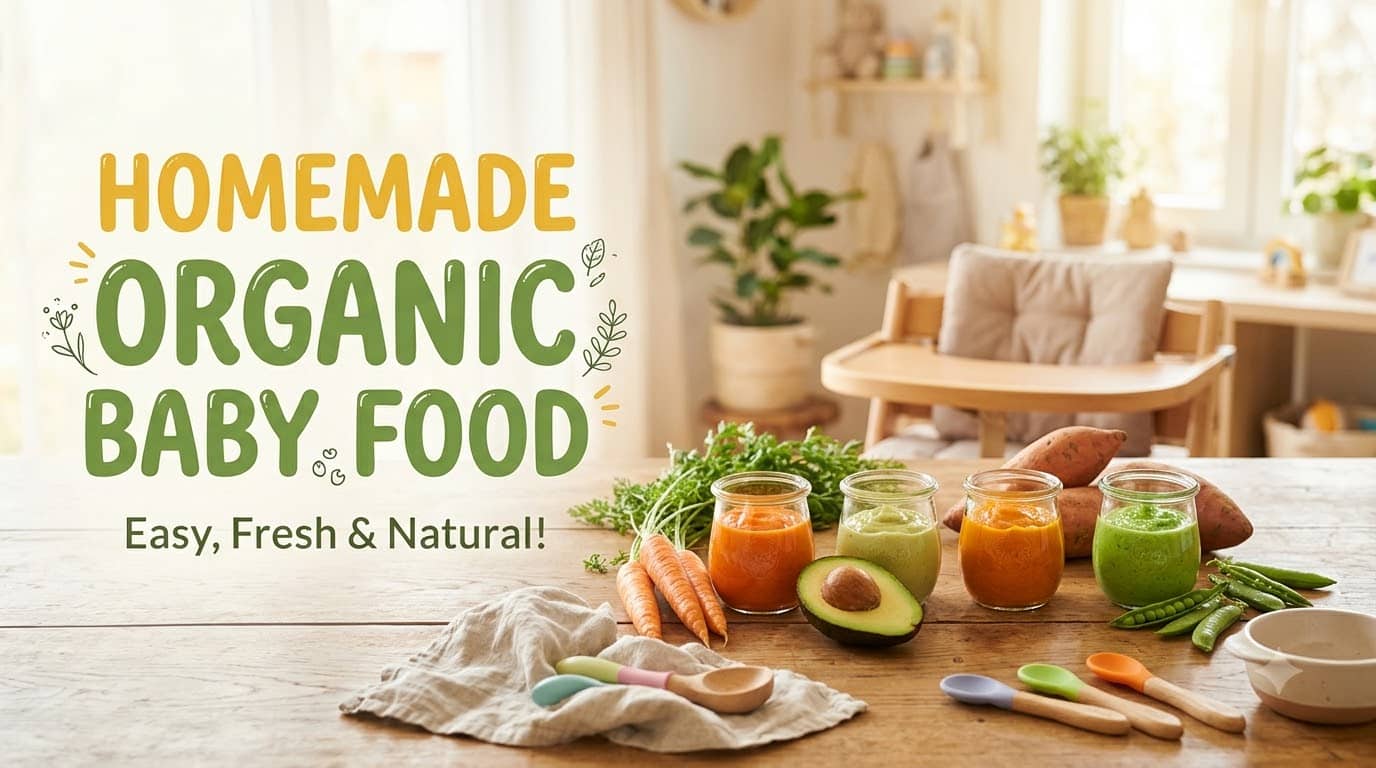
Choosing the right food for a baby is an important part of early childhood care. Parents naturally want to provide meals that support healthy growth and development. When shopping for baby food, some families prefer organic fruits, vegetables, cereals, and other products because they want to know more about how their food is grown and produced.
Organic food for infants has become a popular topic among parents who are introducing solid foods. Organic baby food may include fruit purees, vegetable purees, cereals, grains, and prepared meals made with ingredients produced according to organic farming standards.
However, buying organic food is only one part of feeding a baby well. Babies also need age-appropriate textures, enough nutrients, safe food preparation, and a gradual introduction to different foods. An organic label does not automatically mean that a product is more nutritious or suitable for every infant.
This guide explains what organic baby food means, when babies can start eating solid foods, which ingredients parents can consider, how to prepare meals safely, and what to check before buying packaged organic baby food.
What Is Organic Food for Infants?
Organic food for infants refers to baby foods made with ingredients produced according to recognized organic farming and food-processing standards.
These foods may include:
- Organic fruits and vegetables
- Organic oats and other grains
- Organic lentils and beans
- Organic rice and other cereals
- Organic dairy ingredients
- Organic meat and poultry
- Packaged organic baby purees
- Organic baby snacks suitable for the child’s age
Organic farming standards generally focus on agricultural practices, including soil health, biodiversity, and restrictions on certain synthetic inputs. The exact rules depend on the country and its certification system.
For example, India has organic food regulations recognized by the Food Safety and Standards Authority of India (FSSAI). The Jaivik Bharat logo helps consumers identify certified organic food products in the Indian market.
Organic food is not a special type of nutrition designed only for babies. It is food produced under particular standards. Parents still need to check its nutritional value, ingredients, freshness, and suitability for the baby’s age.
Best Weight Reduce Drink – Complete Guide
When Can Babies Start Eating Organic Solid Foods?
The timing of introducing solid food is more important than whether the first food is organic or conventionally grown.
The World Health Organization (WHO) recommends exclusive breastfeeding for the first six months, followed by the introduction of appropriate complementary foods while breastfeeding continues. Babies who receive infant formula should also follow age-appropriate feeding guidance from their healthcare professional.
For most babies, complementary foods can begin at around six months when they show signs of developmental readiness. Introducing solids before four months is not recommended under CDC guidance.
Signs Your Baby May Be Ready for Solid Foods
Age alone does not determine readiness. Look for signs such as:
- Your baby can sit upright with support.
- Your baby has good head and neck control.
- Your baby opens their mouth when food is offered.
- Your baby can swallow food rather than consistently pushing it out.
- Your baby shows interest in food.
- Your baby can bring objects toward their mouth.
If your baby was born prematurely or has developmental or medical concerns, ask a pediatrician when and how to begin complementary feeding.
Why Milk Remains Important
Starting solid foods does not mean stopping breast milk or infant formula.
During the first year, breast milk or infant formula remains an important source of nutrition. Solid foods gradually add nutrients, flavors, and textures as the baby grows.
Parents should not replace regular milk feeds with large amounts of puree or cereal simply because the baby has started eating solids.
Best Nutrition Advice for Weight Management
Potential Benefits of Choosing Organic Food for Infants
Some parents choose organic baby food because they prefer ingredients produced under organic standards. There may be practical reasons to choose certified products, but it is important to understand what organic food can and cannot offer.
1. Clearer Production Standards
Certified organic products must meet the requirements of the relevant certification system.
This can give parents a way to identify products that follow recognized organic production rules rather than relying only on marketing words.
In India, parents can look for applicable organic certification information and the Jaivik Bharat logo on packaged organic food.
2. Encourages Attention to Food Ingredients
Choosing organic baby food may encourage parents to read ingredient labels more carefully.
This is useful because packaged baby foods can differ in their ingredients, added sugars, salt, texture, and nutritional composition.
Whether organic or not, a simple product with suitable ingredients may be a better everyday choice than a product containing unnecessary sweeteners or ingredients unsuitable for infants.
3. Can Provide Convenient Food Options
Some parents have limited time to prepare every meal from scratch.
Packaged organic baby food may offer convenient options such as fruit puree, vegetable puree, and infant cereals.
These products can be useful when families are travelling or need an occasional ready-made meal. However, parents should check the product’s age recommendation, ingredients, storage instructions, and expiry date.
4. Supports Personal Food Preferences
Some families prefer to purchase organic products for personal, agricultural, or environmental reasons.
Choosing certified organic food can be one way to follow those preferences.
However, parents should not feel that they must buy expensive organic products to feed their babies properly. Safe, varied, nutritious food is more important than the label alone.
Best Organic Foods for Infants
Once a baby is ready for complementary feeding, parents can gradually introduce foods from different food groups.
There is no requirement to start with only fruit or only vegetables. The important things are nutritional variety, safe preparation, and textures suitable for the baby’s development.
1. Organic Vegetables
Vegetables can introduce babies to different flavors and provide fiber, vitamins, and minerals.
Suitable choices may include:
- Carrots
- Pumpkin
- Sweet potatoes
- Peas
- Spinach
- Green beans
- Bottle gourd
- Broccoli
- Cauliflower
For younger babies starting solids, cook vegetables until very soft. Mash or puree them into a smooth texture.
As your baby develops eating skills, you can gradually move toward thicker mashed foods and soft, appropriately sized pieces.
Do not serve hard raw vegetables, as they can create a choking risk.
2. Organic Fruits
Fruits can provide vitamins, fiber, water, and natural sweetness.
Options include:
- Banana
- Apple
- Pear
- Papaya
- Avocado
- Mango
- Peach
- Melon
Wash fruits carefully. Remove seeds, pits, peels, and hard parts where needed.
Hard fruits such as apples should be cooked until soft before mashing or serving in an age-appropriate form.
Whole fruit is generally a better choice than fruit juice for babies. Juice is not recommended for children under 12 months.
3. Organic Grains and Cereals
Grains can provide energy and other nutrients.
Examples include:
- Oats
- Rice
- Wheat
- Barley
- Millet
- Fortified infant cereals
Prepare grains until they are soft and easy to swallow.
Iron is especially important during infancy. Parents can discuss iron-rich foods and iron-fortified infant cereals with their pediatrician.
If using infant cereal, offering a variety of grains rather than relying only on rice cereal can help provide dietary variety. Rice can contain naturally occurring inorganic arsenic, so using different suitable grains is a sensible approach.
4. Organic Lentils and Beans
Lentils and beans are useful sources of plant protein and other nutrients.
Examples include:
- Moong dal
- Masoor dal
- Toor dal
- Chickpeas
- Kidney beans
- Other suitable pulses
Cook these foods thoroughly until soft. Mash or puree them to a texture your baby can manage.
Whole beans can be a choking hazard, so do not offer them whole to a young baby.
5. Organic Dairy Foods
For babies who have started complementary foods, some pasteurized dairy products may be suitable.
Plain, unsweetened yogurt can be introduced as part of a varied diet. Certain pasteurized cheeses may also be appropriate when prepared safely and served in a suitable texture.
However, cow’s milk should not replace breast milk or infant formula as the main drink before 12 months. Dairy products and cow’s milk as a drink are not the same thing.
Discuss dairy choices with your pediatrician if your baby has a suspected milk allergy or another medical concern.
6. Organic Protein Foods
Protein supports growth and normal body functions.
Depending on your family’s diet, suitable foods may include:
- Well-cooked eggs
- Soft chicken
- Fish prepared without bones
- Lentils
- Tofu
- Beans
- Meat prepared to a safe, soft texture
These foods should be cooked thoroughly and prepared according to the baby’s developmental eating skills.
Avoid large, tough pieces of meat or fish bones.
Best Dietician for Weight Loss | Simple Guide
How to Introduce Organic Foods to Your Baby
Introducing new foods should be a gradual learning experience. Babies need time to explore flavors, smells, and textures.
Start With Simple Foods
Begin with small amounts of an age-appropriate food.
Examples include:
- Mashed banana
- Cooked and mashed pumpkin
- Soft carrot puree
- Mashed sweet potato
- Well-cooked lentil puree
You do not need to create complicated recipes during the first days of complementary feeding.
Introduce Foods One at a Time Initially
Offering a single-ingredient food at first can make it easier to identify a possible reaction.
The CDC advises introducing one new single-ingredient food at a time and waiting three to five days between new foods to help identify possible problems.
However, do not unnecessarily delay the introduction of common allergenic foods once your baby is ready for complementary feeding. Foods such as well-cooked egg and smooth peanut butter prepared safely can be introduced in age-appropriate forms.
If your baby has severe eczema, an existing food allergy, or another allergy-related concern, speak with a pediatrician before introducing peanut or other allergenic foods.
Never give whole nuts or thick spoonfuls of nut butter to a baby because they can cause choking.
Gradually Change Food Textures
Babies develop eating skills over time.
At first, smooth purees and mashed foods may be easier. Later, thicker textures and soft small pieces can help babies learn to chew and manage different foods.
Do not keep every food completely smooth for longer than necessary. Follow your baby’s developmental progress and professional feeding guidance.
Watch for Possible Food Allergies
Food allergies can cause symptoms such as:
- Hives or a skin rash
- Swelling of the lips or face
- Vomiting
- Coughing or wheezing
- Breathing difficulty
Severe allergic reactions require emergency medical attention. If your baby has difficulty breathing, swelling of the tongue or throat, or becomes unusually weak or unresponsive after eating, seek emergency help immediately.
Weight Loss Clinic – Simple Guide for Everyone
Simple Organic Baby Food Ideas for Parents
Homemade baby food does not need to be complicated. A few suitable ingredients can create simple meals.
These are general ideas for babies who are already developmentally ready for complementary foods. Adjust texture and ingredients to your baby’s age and feeding ability.
Organic Carrot Puree
Ingredients:
- One small carrot
- Clean drinking water
Preparation:
- Wash and peel the carrot.
- Cut it into small pieces.
- Steam or boil until completely soft.
- Mash or blend until smooth.
- Allow it to cool before serving.
Do not add salt, sugar, or honey.
Organic Pumpkin Mash
Ingredients:
- A small piece of pumpkin
- Clean drinking water
Preparation:
- Wash and remove the pumpkin seeds and skin.
- Cut it into small pieces.
- Steam until very soft.
- Mash with a fork or blend.
- Adjust the texture with a little suitable liquid if needed.
Pumpkin can be offered as a simple single-ingredient food when your baby is ready for solids.
Organic Moong Dal Puree
Ingredients:
- A small amount of moong dal
- Clean drinking water
Preparation:
- Wash the dal thoroughly.
- Cook it until completely soft.
- Mash or blend it into a smooth texture.
- Cool before feeding.
As your baby develops, the texture can gradually become thicker.
Banana and Avocado Mash
Ingredients:
- A small amount of ripe banana
- A small amount of ripe avocado
Preparation:
- Wash the outside of the avocado before cutting.
- Remove the peel and pit.
- Mash the banana and avocado thoroughly.
- Serve a suitable small portion immediately.
If either ingredient is new, introduce it separately first so you can observe how your baby responds.
Weight Loss Programs – Simple Guide for Everyone
Organic Baby Food vs. Regular Baby Food
Parents often wonder whether organic baby food is always better than regular baby food.
The answer is not that simple. Both organic and conventionally produced foods can provide useful nutrients when they are safe, fresh, and prepared properly.
| Feature | Organic Baby Food | Conventional Baby Food |
|---|---|---|
| Production | Follows applicable organic standards | Follows general food safety and production standards |
| Certification | Requires relevant organic certification for certified claims | Organic certification is not required |
| Nutrition | Depends on ingredients and recipe | Depends on ingredients and recipe |
| Price | May be more expensive | Often available at different price levels |
| Food variety | Depends on product range | Depends on product range |
| Suitability for babies | Must match age and feeding needs | Must match age and feeding needs |
An organic label does not guarantee that a product has more vitamins, more protein, or fewer calories.
The most important factors are food safety, nutritional quality, age suitability, and a varied diet.
How to Choose Packaged Organic Baby Food
Packaged baby food can be convenient, but parents should examine the product before purchasing it.
Check the Organic Certification
In India, look for the Jaivik Bharat logo and relevant certification information on packaged organic products.
FSSAI recognizes organic certification systems including the National Programme for Organic Production (NPOP) and Participatory Guarantee System (PGS-India).
Check the product label and, when necessary, use the official Jaivik Bharat portal to verify organic product or business information.
Do not rely only on words such as “natural,” “farm fresh,” or “pure” as proof of organic certification.
Read the Ingredient List
Choose products with ingredients appropriate for the baby’s age.
Check for:
- Added sugar
- Added salt
- Honey
- Unnecessary sweeteners
- Ingredients that may trigger allergies
- Ingredients your baby has not yet tried
For infants, simple products with clear ingredient information can make food choices easier.
Check the Expiry Date and Packaging
Before purchasing packaged baby food:
- Check the manufacturing and expiry dates.
- Make sure the packaging is sealed.
- Avoid swollen, leaking, or damaged containers.
- Follow refrigeration instructions.
- Read the instructions for opening and storage.
Do not use food from damaged packaging or food that has been stored incorrectly.
Compare the Nutritional Information
Look for products that provide useful nutrients rather than relying on marketing claims.
For example, infant cereals may be fortified with iron. A fruit puree may provide fiber but may not contain much protein.
Different foods serve different purposes, so variety is important.
Important Foods and Drinks to Avoid During Infancy
Food safety is especially important during the first year of life. Even an organic ingredient can be unsafe if it is prepared incorrectly or offered too early.
Honey Before 12 Months
Do not give honey to babies younger than 12 months.
Honey can contain spores that cause infant botulism, a serious illness. Avoid adding honey to purees, water, formula, or other baby foods.
This restriction applies to organic honey as well.
Added Salt and Sugar
Babies do not need added salt or sugar in their complementary foods.
Avoid adding salt to homemade baby food. Also avoid sweetening purees or cereals with sugar, syrups, or honey.
Let babies gradually experience the natural flavors of suitable foods.
Cow’s Milk as the Main Drink Before 12 Months
Cow’s milk should not replace breast milk or infant formula as the main drink before a baby’s first birthday.
It does not provide the right nutritional balance for young infants and may create health concerns when used as the main milk source too early.
Plain yogurt and some other dairy foods are different and may be introduced as complementary foods when appropriate.
Fruit Juice
Fruit juice is not recommended for babies younger than 12 months.
Whole fruit, mashed fruit, or suitable puree provides a more useful way to introduce fruit.
Choking-Hazard Foods
Some foods can block a baby’s airway.
Avoid offering:
- Whole nuts
- Whole grapes
- Popcorn
- Hard raw carrot pieces
- Large chunks of apple
- Whole beans
- Hard candies
- Thick spoonfuls of nut butter
- Food containing bones
- Large or tough pieces of meat
Food should be prepared in a texture and shape suitable for the baby’s development.
Always supervise your baby while eating.
How to Prepare and Store Homemade Organic Baby Food Safely
Food hygiene matters whether you buy organic ingredients or conventional produce.
Wash Hands and Kitchen Equipment
Before preparing baby food:
- Wash your hands with soap and clean water.
- Clean the preparation surface.
- Wash knives, spoons, bowls, and other utensils.
- Use clean containers for storage.
- Keep raw meat separate from ready-to-eat foods.
These simple steps help reduce the risk of contamination.
Wash Fruits and Vegetables
Wash produce under clean running water before peeling, cutting, or cooking.
Remove damaged sections and discard spoiled produce.
Organic fruits and vegetables still need to be washed. Organic certification does not mean that food is free from dirt, bacteria, or every possible contaminant.
Cook Foods Thoroughly
Cook hard vegetables until they are soft enough to mash easily.
Cook meat, eggs, fish, and legumes thoroughly. Remove bones, hard pieces, seeds, and other parts that could create choking risks.
Avoid giving babies raw or undercooked animal foods.
Store Food Correctly
Homemade baby food should be handled carefully.
- Refrigerate prepared food promptly.
- Use clean, covered containers.
- Freeze suitable portions if you will not use them soon.
- Follow reliable food-safety guidance for storage times.
- Thaw frozen food safely.
- Reheat food thoroughly when appropriate.
- Never leave perishable baby food sitting out for extended periods.
A spoon that has been in the baby’s mouth should not be placed back into a storage container. Saliva can introduce bacteria into the remaining food.
When in doubt about how long food has been stored or whether it is safe, discard it.
Common Myths About Organic Food for Infants
There are several misconceptions about organic baby food that can make parents feel unnecessary pressure.
Myth 1: Organic Baby Food Is Always More Nutritious
Organic certification relates to production standards, not a guarantee of higher nutritional value.
An organic vegetable puree and a conventional vegetable puree may provide similar nutrients depending on their ingredients and preparation.
Myth 2: Organic Food Is Completely Free From Pesticides
Organic farming standards restrict certain agricultural inputs, but the word organic should not be interpreted as a guarantee that food contains absolutely no pesticide residues.
Parents should still wash produce and follow safe food-handling practices.
Myth 3: Babies Must Eat Only Organic Food
Babies do not need an exclusively organic diet to receive good nutrition.
Families can choose organic products when they prefer and can afford them. Safe preparation, nutritional variety, and age-appropriate foods remain essential.
Myth 4: Homemade Organic Food Is Always Safer Than Packaged Baby Food
Homemade food gives parents control over ingredients, but it still needs careful washing, cooking, handling, and storage.
Commercial baby food can also be a convenient option when it comes from a reliable source, has suitable ingredients, and is stored correctly.
Myth 5: Fruit Purees Are Enough for a Baby
Fruit can be part of a baby’s diet, but it should not be the only complementary food.
Babies also need a variety of foods that provide protein, iron, fats, and other nutrients. Include suitable vegetables, grains, legumes, and protein-rich foods as feeding progresses.
Calorie Deficit Diet Plan for Fast Weight Loss
Conclusion
Choosing organic food for infants can be a personal preference for families who value certified organic farming and food production standards. Organic fruits, vegetables, grains, and other ingredients can all be part of a varied complementary diet.
However, the organic label should never replace the basics of infant nutrition. Most babies begin complementary feeding at around six months when they are developmentally ready, while breast milk or infant formula continues to play an important role.
Start with simple foods, introduce variety gradually, include iron-rich options, and prepare every meal in a texture your baby can manage safely. Pay attention to food allergies, choking hazards, hygiene, storage, and foods that should be avoided during infancy.
Parents do not need to buy only expensive organic products to feed their babies well. The best approach is to choose safe, nutritious, age-appropriate foods that fit the family’s needs and budget.
When you are unsure about introducing a food, managing an allergy, or meeting your baby’s nutritional needs, speak with a pediatrician or qualified child nutrition professional. A safe and balanced feeding routine is more important than any single food label.
Frequently Asked Questions About Organic Food for Infants
1. Is organic food better for infants?
Organic food can be a suitable choice when it is certified, fresh, and prepared safely. However, organic certification does not automatically mean that food contains more nutrients or is healthier than conventional food. A varied diet with suitable textures and enough nutrients is more important than choosing organic products exclusively.
2. When can I start giving organic food to my baby?
For most babies, complementary foods can begin at around six months when they show signs of developmental readiness. Breast milk or infant formula should continue to provide an important part of their nutrition during the first year. Ask your pediatrician for advice if your baby was premature or has feeding or developmental concerns.
3. Which organic foods are suitable for babies starting solids?
Suitable first-food options may include well-cooked and mashed carrots, pumpkin, sweet potato, banana, avocado, oats, and lentils. Introduce foods gradually and prepare them in a texture your baby can swallow safely. Include iron-rich foods as complementary feeding progresses.
4. Is organic baby food free from pesticides?
Organic standards restrict the use of certain agricultural substances, but organic does not mean that food is guaranteed to contain absolutely no pesticide residues. Wash fruits and vegetables thoroughly before preparing food, whether they are organic or conventional.
5. Can I give organic honey to my baby?
No. Do not give any type of honey, including organic honey, to babies younger than 12 months. Honey can contain spores associated with infant botulism, a serious illness. Avoid adding honey to homemade or packaged baby food.
6. Is packaged organic baby food safe?
Packaged organic baby food can be a convenient option when it comes from a reliable manufacturer and is suitable for your baby’s age. Check the organic certification, ingredient list, expiry date, packaging condition, and storage instructions before purchasing.
7. Can I prepare organic baby food at home?
Yes. You can prepare simple baby foods using suitable fruits, vegetables, grains, and legumes. Wash ingredients carefully, cook them thoroughly, mash or puree them to an appropriate texture, and store leftovers safely. Avoid adding honey, excess salt, or sugar.
8. Does organic food help babies grow faster?
There is no reason to assume that organic food automatically makes babies grow faster. Healthy growth depends on adequate nutrition, feeding practices, health, development, and many other factors. Regular pediatric checkups can help monitor your baby’s growth and nutritional needs.
Best Free Artificial Intelligence Tools | 100% Free Tools