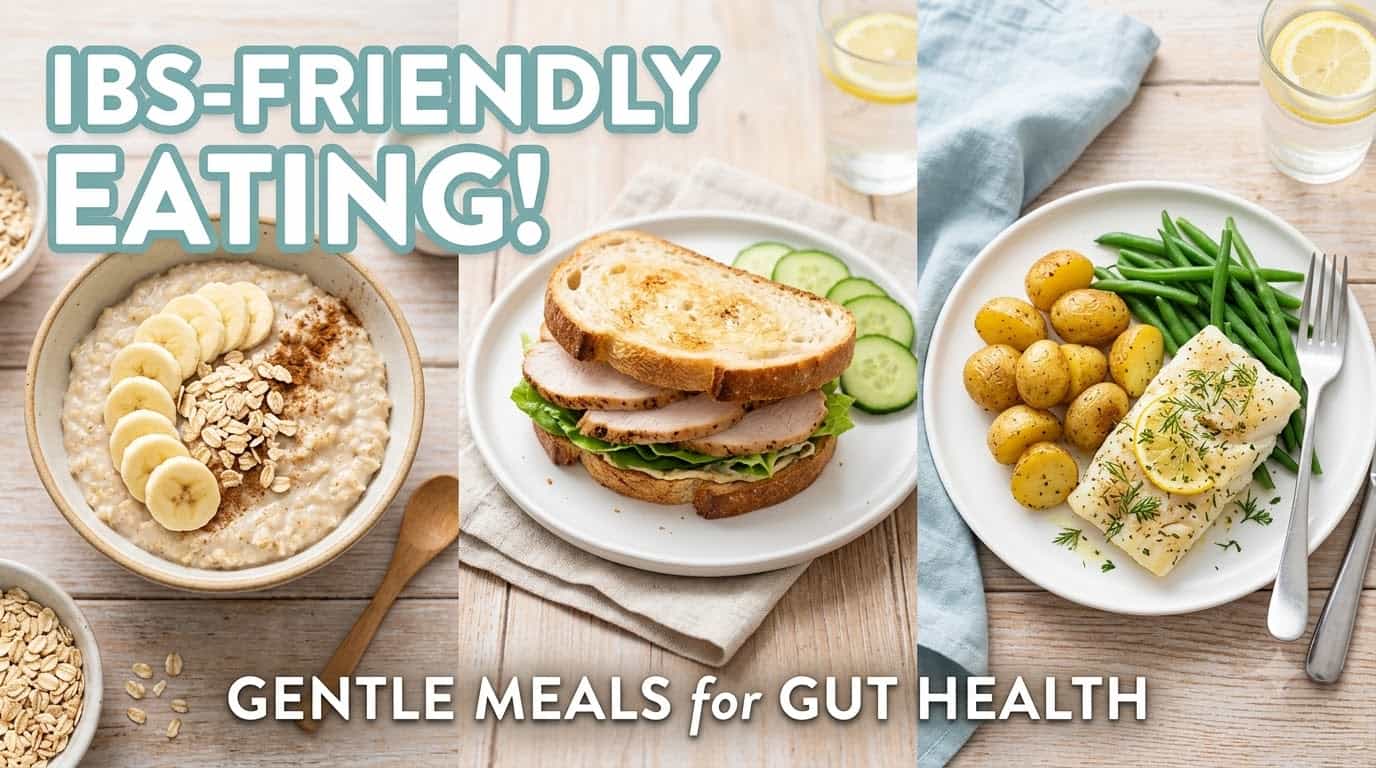
Living with irritable bowel syndrome, commonly called IBS, can make everyday meals feel more complicated than they should. One food may seem fine one day and cause discomfort another day. Bloating, abdominal pain, gas, diarrhea, constipation, or changes in bowel habits can make people unsure about what they should eat.
An IBS friendly meal plan can help bring more structure to eating without requiring an extremely restrictive diet.
There is no single diet that works for everyone with IBS. Some people are sensitive to certain carbohydrates called FODMAPs, while others notice that large meals, fatty foods, caffeine, spicy foods, or particular ingredients trigger symptoms.
The goal is not to eliminate as many foods as possible. Instead, the goal is to identify your personal triggers while maintaining a varied and nutritious diet.
This guide explains how to create an IBS-friendly meal plan, provides a simple 7-day example, and discusses foods that may be easier or harder to tolerate.
What Is IBS?
Irritable bowel syndrome is a digestive condition associated with symptoms such as abdominal pain and changes in bowel habits.
People with IBS may experience:
- Bloating
- Gas
- Abdominal discomfort or pain
- Diarrhea
- Constipation
- Alternating diarrhea and constipation
- Changes in stool consistency
- A feeling of incomplete bowel movements
IBS affects people differently.
Some people mainly experience constipation, while others mainly have diarrhea. Some experience a mixture of both.
Because symptoms can have many causes, persistent or concerning digestive symptoms should be evaluated by a healthcare professional rather than automatically being assumed to be IBS.
Best Weight Reduce Drink – Complete Guide
What Makes a Meal IBS Friendly?
An IBS-friendly meal is not necessarily a meal that contains only a specific list of foods.
A better way to think about it is a meal that:
- Fits your personal trigger list
- Uses reasonable portions
- Is not unnecessarily complicated
- Provides useful nutrients
- Includes foods you tolerate comfortably
- Does not contain ingredients that consistently worsen your symptoms
For some people, reducing high-FODMAP foods for a limited period may help identify triggers. However, a low-FODMAP diet is best approached with guidance from a registered dietitian or other qualified healthcare professional because unnecessarily restricting many foods for a long time can make the diet less varied.
Understanding FODMAPs
FODMAP stands for fermentable carbohydrates that can be difficult for some people with IBS to tolerate.
They include groups of carbohydrates such as:
- Certain fructans
- Fructose in excess amounts
- Lactose
- Galacto-oligosaccharides
- Sorbitol
- Mannitol
These carbohydrates can be poorly absorbed in some people and may contribute to digestive symptoms.
However, FODMAPs are not unhealthy foods.
Many foods containing FODMAPs are nutritious. The issue is whether a particular food, amount, and combination causes symptoms for you.
A low-FODMAP approach is generally intended as a structured process rather than a permanent diet in which every high-FODMAP food is avoided indefinitely.
Best Nutrition Advice for Weight Management
Foods That May Be Easier to Tolerate
Individual tolerance is different, but some foods are commonly used in IBS-friendly meal planning.
Rice
Rice is a simple carbohydrate that many people find easy to include in meals.
You can combine a moderate serving of rice with vegetables and a protein source.
Oats
Oats can provide fiber and can be used for breakfast.
If you are increasing fiber, do it gradually. A sudden large increase in fiber can sometimes worsen gas and bloating.
Eggs
Eggs provide protein and can be prepared in several simple ways.
Try boiled eggs, scrambled eggs, or a simple omelet with vegetables you tolerate.
Lean proteins
Depending on your diet, options may include:
- Chicken
- Turkey
- Fish
- Eggs
- Firm tofu
Plainly prepared protein may be easier to manage than heavily fried or highly seasoned versions.
Certain fruits
Some people with IBS tolerate fruits such as:
- Kiwi
- Oranges
- Grapes
- Strawberries
- Blueberries
- Pineapple
Portion size still matters.
A food that is tolerated in a small amount may cause symptoms when eaten in a much larger quantity.
Certain vegetables
Depending on individual tolerance, options may include:
- Carrots
- Spinach
- Cucumber
- Bell peppers
- Zucchini
- Eggplant
- Green beans
- Potatoes
Cooking vegetables may make them easier for some people to tolerate.
Best Dietician for Weight Loss | Simple Guide
Foods That May Trigger IBS Symptoms
There is no universal IBS trigger list.
However, some people report symptoms after eating certain foods.
Potential triggers can include:
- Large amounts of onion
- Garlic
- Certain dairy products
- Some beans and legumes
- Certain fruits
- Large amounts of wheat-based foods
- Sugar alcohols
- Very fatty meals
- Spicy foods
- Carbonated drinks
- Excess caffeine
- Large meals
This does not mean everyone with IBS needs to avoid these foods.
For example, some people tolerate small amounts of dairy while others have symptoms because of lactose intolerance.
The most useful approach is to observe your own response rather than assuming that every food on an internet list is a problem.
Weight Loss Clinic – Simple Guide for Everyone
Why Portion Size Matters
People often focus only on the food itself and forget about the amount.
Portion size can make a difference.
For example, you may tolerate a small serving of a particular food but experience bloating after eating a very large portion.
Instead of immediately removing a food from your diet, consider recording:
- What you ate
- How much you ate
- What time you ate
- Your symptoms afterward
- Your stress level
- Your sleep
- Your bowel pattern
A simple food and symptom diary can help identify patterns.
A 7-Day IBS Friendly Meal Plan
The following is an example rather than a medical prescription.
Individual tolerance varies, so modify the meals according to your symptoms and professional dietary advice.
Day 1
Breakfast:
Oatmeal topped with strawberries and a small amount of chia seeds.
Lunch:
Grilled chicken with white or brown rice, carrots, spinach, and cucumber.
Snack:
Kiwi or a small serving of grapes.
Dinner:
Baked fish with potatoes and cooked green beans.
Day 2
Breakfast:
Two eggs with spinach and a side of toast that you tolerate.
Lunch:
Rice bowl with grilled chicken, carrots, cucumber, and leafy greens.
Snack:
Plain lactose-free yogurt if tolerated.
Dinner:
Firm tofu with rice and sautéed zucchini and bell peppers.
Day 3
Breakfast:
Oatmeal with blueberries and a small serving of tolerated nuts or seeds.
Lunch:
Baked fish with potatoes and cooked vegetables.
Snack:
Orange.
Dinner:
Chicken with rice, spinach, carrots, and cucumber.
Day 4
Breakfast:
Scrambled eggs with spinach and a small serving of toast.
Lunch:
Chicken and rice bowl with zucchini and carrots.
Snack:
Strawberries.
Dinner:
Baked tofu with potatoes and green beans.
Day 5
Breakfast:
Oats with kiwi and a small amount of seeds.
Lunch:
Grilled fish with rice and cooked vegetables.
Snack:
Lactose-free yogurt if tolerated.
Dinner:
Chicken, potatoes, carrots, and spinach.
Day 6
Breakfast:
Eggs with a small serving of toast and cucumber.
Lunch:
Rice bowl with tofu, carrots, spinach, and zucchini.
Snack:
Grapes or another fruit you tolerate.
Dinner:
Grilled chicken with potatoes and green beans.
Day 7
Breakfast:
Oatmeal with strawberries and a small amount of seeds.
Lunch:
Baked fish with rice, carrots, and spinach.
Snack:
Kiwi or orange.
Dinner:
Tofu or chicken with potatoes and cooked vegetables.
This sample plan is intentionally simple. You can change the protein, vegetables, grains, and fruit based on what your body tolerates.
IBS Friendly Breakfast Ideas
Breakfast can be especially difficult for people who experience morning digestive symptoms.
A simple meal may be easier than a large, heavy breakfast.
Oatmeal
Oats can be combined with a suitable fruit and a small amount of seeds or nuts.
Avoid adding large amounts of sweeteners if they trigger symptoms.
Eggs and toast
Eggs can provide protein while a suitable portion of toast provides carbohydrates.
Choose a bread that you personally tolerate.
Lactose-free yogurt with fruit
If dairy is a problem for you, lactose-free yogurt may be an option.
Choose plain varieties if added sugar is a concern.
IBS Friendly Lunch Ideas
Lunch should be satisfying without being unnecessarily heavy.
Chicken rice bowl
Combine:
- Grilled chicken
- Rice
- Carrots
- Cucumber
- Spinach
Use a simple dressing that does not contain ingredients you know trigger symptoms.
Fish and potatoes
Baked fish with potatoes and cooked vegetables can make a simple lunch.
Avoid heavy sauces if fatty meals tend to worsen your symptoms.
Tofu vegetable bowl
Firm tofu with rice and suitable vegetables can provide a plant-based option.
Keep seasoning simple while you are trying to identify triggers.
Weight Loss Programs – Simple Guide for Everyone
IBS Friendly Dinner Ideas
Dinner can follow the same basic structure as lunch.
Try combining:
Protein + tolerated carbohydrate + tolerated vegetables.
For example:
- Chicken + rice + carrots
- Fish + potatoes + green beans
- Tofu + rice + zucchini
- Eggs + potatoes + spinach
Simple meals can make it easier to identify which ingredient is causing a problem if symptoms occur.
IBS Friendly Snacks
You do not have to snack between every meal.
If you are hungry, choose a small portion of something you tolerate.
Possible options include:
- Kiwi
- Strawberries
- Grapes
- Orange
- Plain lactose-free yogurt
- Rice cakes
- A small serving of suitable nuts
- A boiled egg
Your personal tolerance should guide your choices.
What About Dairy?
Dairy is not automatically a problem for everyone with IBS.
Some people have difficulty digesting lactose, the naturally occurring sugar in milk.
If lactose appears to trigger symptoms, lactose-free dairy products may be worth trying.
Some people may also tolerate certain aged cheeses better than milk.
If you suspect lactose intolerance, a healthcare professional or dietitian can help you determine whether lactose is actually contributing to your symptoms.
What About Gluten?
IBS and gluten sensitivity are not the same thing.
Some people with IBS report feeling better when they reduce wheat-based foods, but that does not automatically mean they have celiac disease or a medical gluten intolerance.
If you suspect celiac disease, talk with a healthcare professional before eliminating gluten because testing can be affected by removing gluten from the diet.
It is also important not to assume that every digestive symptom after eating bread is caused by gluten.
Other components of wheat-containing foods can also affect digestion.
What About Spicy Food?
Spicy foods can trigger symptoms for some people, especially if they already notice discomfort after eating them.
If spicy food repeatedly causes symptoms, reduce the amount or choose milder seasonings.
You can still add flavor with herbs and seasonings that you tolerate.
For example:
- Ginger
- Chives
- Fresh herbs
- Lemon
- Turmeric
- Black pepper in a suitable amount
The goal is not to make food bland. It is to find flavors that work for your digestive system.
What About Coffee and Tea?
Caffeine can affect bowel activity.
Some people with IBS notice that coffee or strong tea makes diarrhea or urgency worse.
If this happens to you, consider reducing the amount or switching to a lower-caffeine or caffeine-free option.
It can be useful to test your response rather than automatically eliminating every caffeinated drink.
What About Beans and Lentils?
Beans and lentils are nutritious foods, but they can cause gas and bloating in some people.
That does not necessarily mean you can never eat them.
If you want to include legumes, start with a small amount and see how you respond.
Preparation can also matter. Some people find certain canned and well-rinsed legumes easier to tolerate than large servings of dried legumes.
If you are following a structured low-FODMAP diet, use appropriate serving guidance rather than guessing.
Fiber and IBS
Fiber is important, but the type of fiber can matter.
Some people with IBS find that increasing soluble fiber gradually is easier to tolerate than suddenly eating very large amounts of rough, high-fiber foods.
Foods containing soluble fiber include oats and certain fruits and vegetables.
If constipation is your main symptom, discuss fiber intake with a healthcare professional or dietitian.
If diarrhea is your main symptom, simply adding large amounts of fiber may not be the right approach.
Your symptoms and individual response matter.
IBS Meal Planning Tips
Meal planning does not have to take hours.
Keep a short list of safe foods
Write down foods you generally tolerate well.
Divide them into categories:
- Proteins
- Carbohydrates
- Vegetables
- Fruits
- Snacks
This gives you a simple menu-building system.
Cook basic ingredients in batches
You can prepare rice, potatoes, chicken, tofu, or suitable vegetables in advance.
Store them properly and combine them into different meals during the week.
Avoid changing everything at once
If you remove ten foods simultaneously and your symptoms improve, it becomes difficult to know which change helped.
A structured approach can provide more useful information.
Eat slowly
Eating quickly can lead to swallowing more air and may make some digestive symptoms feel worse.
Take your time and pay attention to how your body responds.
Avoid very large meals
Large meals may be harder for some people with IBS to tolerate.
Smaller, regular meals may work better for certain individuals.
Common IBS Diet Mistakes
Eliminating too many foods
Fear of symptoms can lead people to remove large numbers of foods.
This can make meals unnecessarily restrictive and may increase the risk of nutritional gaps.
Following internet food lists too strictly
Online lists can be useful starting points, but they do not replace individual assessment.
A food that bothers one person may be perfectly comfortable for another.
Eating very little
Trying to prevent symptoms by severely restricting food is not a healthy long-term strategy.
You still need enough energy and nutrients.
Ignoring non-food triggers
Food is not the only factor.
Stress, sleep, physical activity, illness, and changes in routine can affect digestive symptoms.
Assuming every symptom is IBS
Persistent or new digestive symptoms deserve appropriate medical evaluation.
Myths About an IBS Friendly Diet
Myth 1: Everyone with IBS should follow a strict low-FODMAP diet forever
A low-FODMAP approach can be useful for some people, but it is generally not intended to mean permanent avoidance of every high-FODMAP food.
A qualified dietitian can help with the elimination, reintroduction, and personalization process.
Myth 2: You can never eat your favorite foods again
Not necessarily.
Many people can eventually reintroduce foods in suitable portions once they understand their individual tolerance.
Myth 3: IBS means you need a liquid diet
There is generally no reason for someone with IBS to live on liquids simply because solid foods cause discomfort.
A healthcare professional should evaluate significant or persistent digestive problems.
Myth 4: Gluten is the cause of all IBS symptoms
Gluten is not automatically responsible for IBS symptoms.
There are several possible dietary and non-dietary triggers.
Myth 5: More fiber is always better
Fiber is important, but suddenly consuming very large amounts can worsen gas and bloating in some people.
The type, amount, and your individual tolerance matter.
When to See a Doctor
IBS symptoms can overlap with other digestive conditions.
Seek medical evaluation if you have symptoms that are new, severe, persistent, or concerning.
Particularly important warning signs can include:
- Unexplained weight loss
- Blood in the stool
- Black or tarry stools
- Persistent vomiting
- Fever
- Severe or worsening abdominal pain
- Symptoms that regularly wake you from sleep
- A significant change in bowel habits
These symptoms should not simply be assumed to be IBS.
A healthcare professional can determine whether testing or further evaluation is needed.
When a Dietitian Can Help
A registered dietitian can be especially helpful if you are struggling to identify food triggers.
Professional guidance can help you:
- Build nutritionally balanced meals
- Understand FODMAPs
- Identify possible triggers
- Avoid unnecessary restrictions
- Reintroduce foods systematically
- Adapt meals to vegetarian or vegan diets
- Manage fiber intake
- Create meals that fit your culture and budget
This can be much more useful than following a long online list of foods to avoid.
Conclusion
An IBS friendly meal plan should make eating easier, not turn food into a source of constant fear.
Start with simple meals containing foods you generally tolerate. Pay attention to portions, eat at a comfortable pace, and keep a food and symptom diary when you are trying to understand your triggers.
A structured low-FODMAP approach may be useful for some people, but it should not automatically become a permanent, highly restrictive diet.
Most importantly, remember that IBS is individual. Your trigger foods may be different from someone else’s, and your symptoms can change over time.
If digestive symptoms are severe, persistent, or accompanied by warning signs such as blood in the stool or unexplained weight loss, seek medical advice rather than trying to manage the problem through diet alone.
The goal is a varied, nutritious, and realistic eating pattern that supports your health while helping you feel more comfortable with food.
Frequently Asked Questions
What is an IBS friendly meal plan?
An IBS-friendly meal plan is a flexible eating plan built around foods and portions that an individual can tolerate comfortably. It often uses simple meals, appropriate portions, and careful attention to personal triggers.
What foods are good for IBS?
Foods that may be easier for some people include oats, rice, potatoes, eggs, lean proteins, firm tofu, carrots, spinach, zucchini, cucumber, and certain fruits. Individual tolerance varies, so no food is guaranteed to work for everyone.
Should people with IBS avoid all high-FODMAP foods?
No. A low-FODMAP diet is generally used as a structured approach to identify individual triggers rather than as a permanent restriction of every high-FODMAP food. Professional guidance can make the process safer and more useful.
Can I eat rice if I have IBS?
Rice is commonly included in IBS-friendly meals and may be tolerated by many people. Portion size and the other ingredients in the meal can still matter.
What should I eat for breakfast with IBS?
Simple options may include oatmeal with suitable fruit, eggs with tolerated toast, or lactose-free yogurt with fruit. Choose foods based on your personal symptoms and tolerance.
Can fruit make IBS worse?
Some fruits may trigger symptoms in certain people, particularly at larger portions. Other fruits may be tolerated well. Keeping a food and symptom diary can help identify your individual pattern.
Is coffee bad for IBS?
Coffee is not automatically a problem for everyone, but caffeine can affect bowel activity and may worsen symptoms for some people. If coffee triggers symptoms, reducing the amount or choosing a lower-caffeine option may help.
Can IBS be cured by changing your diet?
Dietary changes can help many people manage symptoms, but IBS is a complex condition and there is no single diet that cures everyone. A healthcare professional can help you create an appropriate management plan.
Best Free Artificial Intelligence Tools | 100% Free Tools