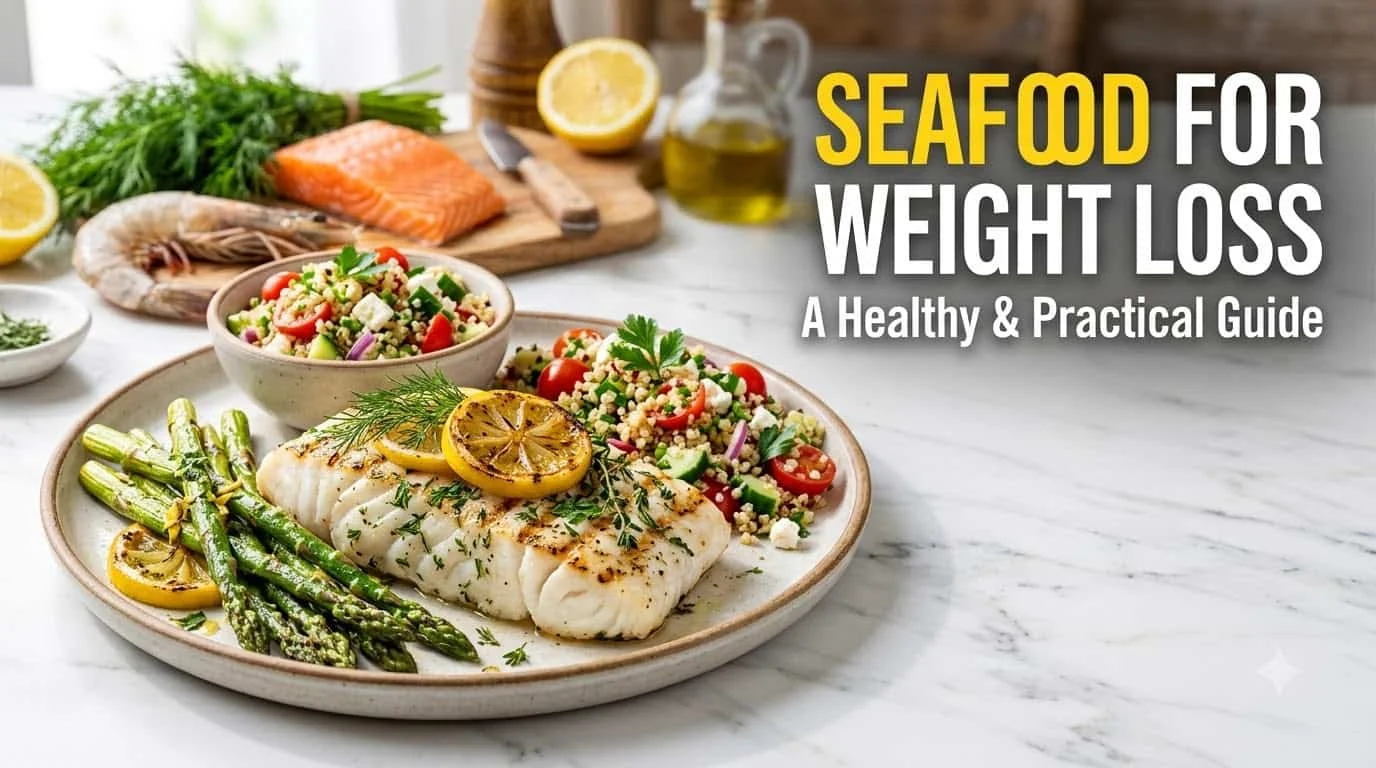
Seafood can be a delicious and nutritious part of a balanced eating pattern. Many people looking for satisfying meals with protein wonder whether seafood for weight loss is a good choice.
The simple answer is that seafood can fit well into a weight-loss eating plan, but no single food causes weight loss by itself. Your overall eating pattern, portion sizes, activity level, sleep, and individual health needs all play a role.
Fish and shellfish can provide protein and other nutrients. However, the way seafood is prepared can make a big difference. Grilled or baked fish served with vegetables is very different from heavily breaded, deep-fried seafood served with large portions of creamy sauce and fried side dishes.
This guide explains how seafood may fit into a balanced weight-management plan, which types of seafood you may consider, practical cooking methods, common mistakes, and easy meal ideas.
Best Plant Based Protein Powder for Your Diet and Lifestyle
Why Seafood Can Be a Good Choice for Weight Loss
One reason people include seafood in a weight-management plan is its protein content. Protein is an important nutrient, and including protein-rich foods in meals may help make meals more satisfying for some people.
Seafood can also add variety to your diet. Instead of eating the same foods every day, you can rotate different protein sources such as fish, eggs, beans, lentils, chicken, tofu, and seafood.
Variety can make a healthy eating routine easier to maintain.
However, the word “seafood” covers many different foods. Fish, shrimp, crab, mussels, clams, and squid can all have different nutritional profiles and may be prepared in very different ways.
The most useful approach is to think about the complete meal rather than focusing only on the seafood itself.
For example, a simple plate containing baked fish, vegetables, and a suitable portion of a carbohydrate-rich food may fit into a balanced diet. The same fish prepared with a heavy coating and served with large amounts of high-calorie sauces may have a very different nutritional profile.
Understanding the Role of Protein in Weight Management
Protein is an important nutrient needed by the body for many functions.
Including a source of protein in a meal can also help create a more balanced plate. Seafood is one possible protein source, but it is not the only option.
For weight management, it can be helpful to create meals that include:
- A protein source
- Vegetables or other fiber-rich foods
- A suitable source of carbohydrates
- Foods containing healthy fats
The exact balance will depend on your individual needs and preferences.
Rather than eating only seafood or cutting out entire food groups, focus on building meals that are enjoyable and practical enough to continue over time.
You may also find useful ideas in related Helping99.com topics such as cheap high protein meals, high protein diet for weight loss, and healthy grocery list for weight loss.
Best Types of Seafood for Weight Loss
There is no single “best” seafood for everyone. Different seafood options can fit into a healthy diet.
Salmon
Salmon is a popular fish with a rich flavor.
It contains protein and fat, including omega-3 fatty acids. Because salmon is naturally higher in fat than some lean fish, portion size and the overall meal can be considered when planning your diet.
Salmon can be baked, grilled, or cooked in a pan with a reasonable amount of oil.
Try serving it with vegetables and a simple side dish.
Tuna
Tuna is commonly used in sandwiches, salads, wraps, and rice dishes.
Choose preparation methods that match your overall dietary goals. For example, a tuna salad made mainly with vegetables and a simple dressing may be different from one containing large amounts of creamy dressing.
When eating canned seafood, check the label for ingredients and sodium content.
Cod
Cod has a mild flavor and is often easy to include in different recipes.
Baked or grilled cod can be served with vegetables, potatoes, rice, or a salad.
Instead of relying on heavy batter, try seasoning cod with herbs, spices, garlic, lemon, or pepper.
Shrimp
Shrimp is another popular seafood option.
It can be used in stir-fries, salads, soups, and rice dishes.
Cooking method matters. Grilled or sautéed shrimp prepared with reasonable amounts of oil can be very different from heavily breaded and deep-fried shrimp.
Season shrimp with garlic, herbs, spices, or lemon for flavor.
Sardines
Sardines are small oily fish that can be eaten in several ways.
They may be used in salads, sandwiches, or meals with grains and vegetables.
If you buy canned sardines, check the package for the ingredients and sodium information.
Mussels and Clams
Shellfish such as mussels and clams can be included in soups, pasta dishes, and other meals.
Preparation can strongly affect the final dish. A simple tomato-based preparation may be quite different from a dish with a large amount of cream or butter.
The goal does not need to be avoiding every rich food. Instead, consider how often and how much you eat and focus on your overall dietary pattern.
Healthy Grocery List for Weight Loss
How Seafood Can Fit Into a Weight-Loss Meal
A helpful way to plan meals is to look at the complete plate.
Imagine a dinner containing grilled fish, vegetables, and a serving of rice or potatoes.
This meal can provide different nutrients and may be more satisfying than eating only a small piece of fish.
Vegetables can add color, flavor, and variety. Foods containing carbohydrates can provide energy, while protein helps make the meal more balanced.
You do not need to remove carbohydrates completely to lose weight.
The best approach is one that you can enjoy and maintain.
Healthy Ways to Cook Seafood
Cooking methods can change the amount of added fat and calories in a meal.
Baking
Baking seafood is simple and requires little added oil.
Try seasoning fish with:
- Lemon
- Garlic
- Black pepper
- Paprika
- Herbs
- Ginger
Serve with roasted vegetables for a simple meal.
Grilling
Grilling can add flavor without needing heavy breading.
Marinades and spices can make grilled seafood more interesting.
Be careful with sugary marinades if you are trying to reduce added sugar.
Steaming
Steaming can work well for fish and some shellfish.
Add herbs, garlic, ginger, lemon, or spices for more flavor.
Pan Cooking
You can cook seafood in a pan using a moderate amount of oil.
Add vegetables to make a complete meal.
For example, shrimp can be cooked with onions, tomatoes, peppers, and other vegetables.
Deep Frying
Deep-fried seafood can still be enjoyed occasionally if it fits your overall eating habits, but eating it frequently may make it harder for some people to manage their calorie intake.
If you enjoy a crispy texture, you can also explore baking or air-frying recipes.
Best Vitamins for Adults – What You Need to Know
Seafood Meal Ideas for Weight Management
Grilled Fish and Vegetables
Season fish with lemon, garlic, and pepper.
Grill or bake it and serve with vegetables and a suitable side dish.
Shrimp Vegetable Stir-Fry
Cook shrimp with vegetables such as peppers, onions, carrots, and broccoli.
Serve with a reasonable portion of rice or another grain if desired.
Salmon Salad Bowl
Add cooked salmon to a bowl with leafy vegetables, tomatoes, cucumber, and other vegetables.
Add a dressing you enjoy in an appropriate amount.
Baked Cod With Potatoes
Bake cod with herbs and spices.
Serve with potatoes and vegetables.
This can be a simple and satisfying home-cooked meal.
Seafood Soup
Make a soup using fish or shellfish with vegetables and herbs.
Soups can be a good way to add a variety of ingredients to one meal.
Paleovalley Bone Broth Protein – Benefits, Ingredients and FAQ
Portion Size Still Matters
Even nutritious foods can contribute a significant amount of energy when eaten in very large portions.
You do not need to measure every piece of food forever, but paying attention to portions can help you understand your eating habits.
Try eating slowly and paying attention to hunger and fullness.
Also look at the entire meal.
For example, a moderate portion of fish with plenty of vegetables may feel very different from a large seafood meal with several fried sides and sugary drinks.
Weight management is not about finding one perfect food. It is about developing consistent habits that work for you.
Common Mistakes When Eating Seafood for Weight Loss
Thinking Seafood Automatically Causes Weight Loss
Seafood can be part of a healthy diet, but it does not automatically burn body fat.
Weight change is influenced by your overall diet, physical activity, sleep, health, and many other factors.
Ignoring Cooking Methods
A fish may be a nutritious choice, but the final meal can change significantly depending on how it is cooked.
Heavy breading, large amounts of oil, creamy sauces, and oversized portions can add considerably to the meal.
This does not mean these foods must never be eaten. The important point is to understand the complete meal.
Eating Too Little
Some people try to lose weight by eating extremely small meals.
This can make eating habits difficult to maintain.
Instead, build satisfying meals with protein, vegetables, and other nutritious foods.
Avoiding All Fats
Healthy eating does not require eliminating all dietary fat.
Different foods naturally contain different amounts of fat.
The goal is to focus on overall dietary quality and portions rather than believing that all fat is bad.
Relying Only on Seafood
A varied diet can include seafood along with many other foods.
Beans, lentils, eggs, dairy or suitable alternatives, poultry, tofu, vegetables, fruits, and whole grains can all contribute to a varied eating pattern.
Seafood and a High-Protein Diet
Seafood can be one option for people who want to include more protein-rich foods in their meals.
However, a high-protein diet does not mean eating unlimited amounts of protein powder, meat, or seafood.
Individual protein needs vary depending on factors such as age, body size, activity level, and health.
If you have a medical condition or have been advised to follow a special diet, speak with a qualified healthcare professional before making major dietary changes.
For additional meal inspiration, you can explore related articles on Helping99.com about high protein diet for weight loss and cheap high protein meals.
How Often Should You Eat Seafood?
The right amount can depend on the type of seafood, your overall diet, and individual circumstances.
Different fish can contain different levels of naturally occurring environmental contaminants, and some groups may receive specific advice about choosing certain types of seafood.
If you are pregnant, breastfeeding, feeding a young child, or have a medical condition, seek guidance appropriate to your situation from a qualified healthcare professional or relevant health authority.
Variety can be a sensible approach rather than eating the same type of seafood repeatedly.
Best Food for Friends – Simple Ideas for Every Gathering
Seafood for Weight Loss on a Budget
Seafood does not always need to be expensive.
Depending on where you live, you may find affordable options such as:
- Frozen fish
- Canned tuna
- Canned sardines
- Locally available fish
Frozen seafood can sometimes be convenient because it can be stored longer.
Canned seafood can also be useful for quick meals.
Always check the label and choose options that fit your dietary preferences.
A simple meal can be made with canned fish, vegetables, and a carbohydrate source such as bread, rice, or potatoes.
Healthy eating does not need to mean buying expensive ingredients.
Tips for Buying Seafood
When shopping for seafood, consider:
Freshness
Fresh seafood should be stored and handled properly.
Buy from a trusted seller and follow safe storage instructions.
Frozen Options
Frozen seafood can be a practical choice.
Check the package for ingredients and preparation instructions.
Canned Options
Canned fish can be convenient.
Look at the nutrition information and ingredients.
Added Ingredients
Some seafood products come with sauces, breading, or seasoning mixes.
These ingredients can change the nutrition profile of the product.
Read the package before buying.
Simple Ways to Make Seafood More Flavorful
Healthy food does not need to be bland.
Try using:
- Lemon or lime
- Garlic
- Ginger
- Black pepper
- Paprika
- Turmeric
- Fresh herbs
- Tomatoes
- Onions
- Chili, if you enjoy spicy food
These ingredients can add flavor without depending entirely on heavy sauces.
Experiment with different recipes so that your meals remain enjoyable.
Common Myths About Seafood and Weight Loss
Myth: Eating Fish Burns Fat
Fish does not directly melt body fat.
Seafood can be included in a balanced eating pattern, but weight loss depends on overall habits and individual factors.
Myth: You Must Eat Only Lean Fish
Different types of fish can fit into a healthy diet.
Some fish are leaner, while others naturally contain more fat.
The complete dietary pattern and portion size are more important than labeling one fish as completely good or bad.
Myth: Fried Seafood Is Always Forbidden
Weight management does not require perfection.
Fried seafood can be enjoyed occasionally by many people as part of an overall balanced diet.
The key is to avoid thinking that one meal determines your entire progress.
Myth: Carbohydrates Cannot Be Eaten With Seafood
There is no need for most people to completely avoid foods such as rice, potatoes, or whole grains when eating seafood.
A balanced meal can include protein, vegetables, carbohydrates, and healthy fats.
Myth: Expensive Seafood Is Always Healthier
Price does not automatically determine nutritional quality.
Affordable options can also fit into a healthy diet.
Best Foods for a Heart Healthy Diet and Lifestyle
A Practical One-Day Seafood Meal Example
Breakfast does not need to include seafood. You could start the day with a balanced meal such as eggs, oats, fruit, or another food you enjoy.
For lunch, try a tuna and vegetable sandwich or wrap.
Use vegetables such as lettuce, tomatoes, and cucumber to add variety.
For dinner, prepare baked fish with vegetables and a suitable portion of rice or potatoes.
For snacks, choose foods that help you feel satisfied, such as fruit, yogurt if suitable for your diet, nuts in an appropriate portion, or other nutritious foods.
This is only an example, not a strict diet plan. Your personal food needs may be different.
Conclusion
Seafood for weight loss can be a useful part of a balanced and enjoyable eating pattern. Fish and shellfish can provide protein and add variety to meals, but seafood is not a magic solution for losing body fat.
The most important factors are your overall eating habits and the consistency of your routine. Choosing enjoyable meals, paying attention to portions, including vegetables and other nutritious foods, and using cooking methods that suit your goals can make a real difference over time.
Try baked fish with vegetables, a shrimp stir-fry, a salmon salad, or a simple seafood soup. There is no need to eat the same meal every day or completely avoid foods you enjoy.
A sustainable approach is usually more useful than a strict plan. Include seafood when you enjoy it, choose a variety of nutritious foods, and focus on building healthy habits that fit your lifestyle.
FAQ About Seafood for Weight Loss
Is seafood good for weight loss?
Seafood can be part of a balanced eating pattern for weight management. It can provide protein, and the cooking method and overall meal are important. No single food causes weight loss by itself.
What is the best seafood for weight loss?
There is no one best option for everyone. Fish such as salmon, cod, tuna, and other seafood can fit into a balanced diet. Consider your preferences, budget, cooking method, and the complete meal.
Is shrimp good for weight management?
Shrimp can be included in a balanced diet. Preparation matters, so grilled, steamed, baked, or simply cooked shrimp may be very different from heavily breaded and deep-fried shrimp.
Can I eat salmon when trying to lose weight?
Yes, salmon can fit into a weight-management eating pattern. Consider portion size and how it is prepared as part of your overall diet.
Is fried fish good for weight loss?
Fried fish is not automatically forbidden, but frequent consumption of heavily fried foods may make calorie management harder for some people. Baking or grilling can be practical alternatives.
Can I eat rice with seafood and still lose weight?
Yes. Most people do not need to completely remove rice or other carbohydrates. The overall eating pattern, portions, and individual needs are more important.
How should I cook seafood for a healthy meal?
Baking, grilling, steaming, and pan cooking with a reasonable amount of oil are practical options. Herbs, spices, garlic, ginger, and lemon can add flavor.
Can I eat seafood every day?
The right frequency depends on the type of seafood and individual circumstances. Variety is important, and some people may need specific guidance based on health conditions or life stages.
Best Free Artificial Intelligence Tools | 100% Free Tools